Scavenger hunt Dramione: why this fic is blowing up across podfic, BookTok typesets, and Slytherin rec lists
Scavenger hunt Dramione is having a moment, and it is not subtle
The phrase scavenger hunt dramione is suddenly everywhere, and it is not just because readers are re-reading old favourites. Across TikTok, Spotify, and Instagram, The Scavenger Hunt by emeraldsinthedark is popping up in multiple formats at once: fan-made typesets, podfic episodes, and recommendation reels that treat it like required reading for anyone who wants the full Slytherin gang vibe.
That convergence matters. Fandom has always been multi-platform, but it is usually staggered, a fic trends on one channel, then months later it trickles into another. Here, the signals stack on top of each other. TikTok surfaces “The Scavenger Hunt Dramione Typeset” as a browsing category, Spotify hosts an episode from The Dramione Archives reading chapters 48 to 49, and Instagram’s Slytherin After Dark ecosystem names the fic directly in a curated list of Slytherin-heavy Dramione recommendations. Different audiences, same title, same week-to-week chatter.
And yes, it is a big deal in the tiny, very-online way fandom does big deals. Not because a single post has “broken the internet” (the source material does not provide that kind of platform-wide metric), but because multiple communities are independently pushing the same work, for slightly different reasons. That is usually what a genuine breakout looks like.

What the current buzz actually is: typesets on TikTok, podfic on Spotify, recs on Instagram
Start with TikTok. Source material labelled “The Scavenger Hunt Dramione Typeset” shows a feed-style discovery page with creators and related searches. It is not one creator driving the whole thing. Instead, it is a cluster of accounts and bindery-style handles, including names like Rachael | TheDramioneArchives, foryourthoughtsbindery, JM Binding, JPCreations (Jenny), and TW Binding. The page also surfaces adjacent terms such as “Dramione Typesets Download” and other fic titles formatted as typesets, which is a clue to what is happening: readers are not only consuming the story, they are packaging it.
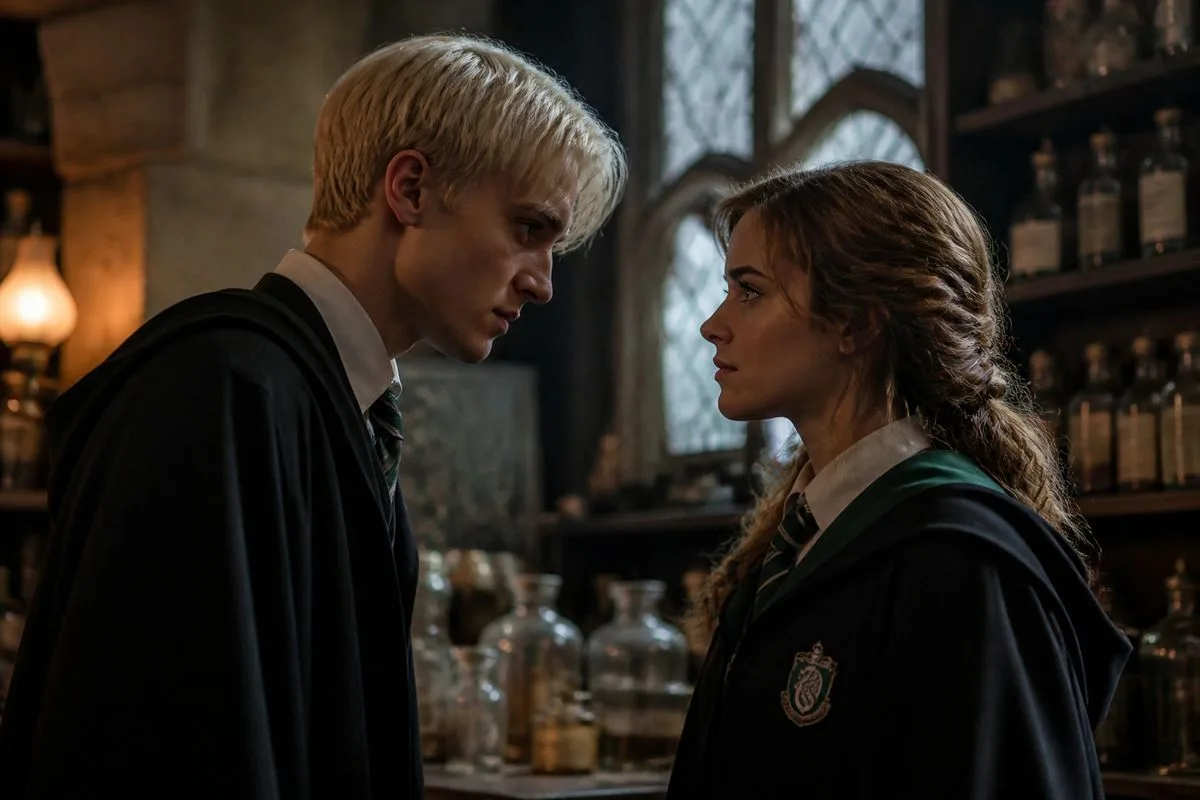
Then there is Spotify, where The Dramione Archives publishes a specific episode titled “The Scavenger Hunt” by emeraldsinthedark | Chapters 48-49 | A Dramione Fanfiction. The episode description lays out the premise clearly: Hermione wants to move on from Hogwarts, but a mandatory return for all 8th-year students and a year-long Unity Project called the Scavenger Hunt forces her back into the mix. Worse, she is paired with Draco Malfoy. The story structure is built around repeated scavenger hunt challenges that test teamwork, resilience, and, inevitably, understanding.
And Instagram is doing what Instagram does best: compressing a whole reading life into a carousel of vibes. In the Slytherin After Dark orbit, one post explicitly lists The Scavenger Hunt by emeraldsinthedark among “Dramione with the full Slytherin gang experience”. It sits alongside other well-known Dramione titles, but the key point is placement. This is not framed as a niche pick, it is framed as part of a canon of “if you like this, you will like that” community staples.
Inside The Scavenger Hunt: the 8th-year Unity Project that powers scavenger hunt Dramione
So what are readers actually signing up for when they search scavenger hunt dramione? Based on the Spotify episode description, the core setup is post-war, 8th-year Hogwarts, with a mandatory return for students. That “mandatory” detail is doing a lot of work. It creates pressure, it limits escape routes, and it forces characters who would rather avoid each other to share space, time, and consequences.
The Unity Project, explicitly called “the Scavenger Hunt”, functions as both plot engine and thematic device. It is not just a cute school activity. It is a structured attempt to push inter-house cooperation, with Gryffindor and Slytherin pairings that can either heal old wounds or rip them open again. The description even frames the stakes in social terms: will the Wizarding World heal, or will these duos tear each other apart? That is a smart hook because it makes romance feel like part of a wider post-war reconstruction story, not a separate bubble.
There is also a practical reason this premise travels well across platforms. Scavenger hunts are episodic by nature. Each challenge is a mini-arc with its own tension, payoff, and emotional shift. That structure is perfect for podfic, where listeners often want clear chapter beats. It is also perfect for TikTok, where creators can typeset or aestheticise individual scenes without needing to summarise the whole plot in 30 seconds.
Typesets, binding, and the collector mindset: why TikTok is obsessed with “The Scavenger Hunt Dramione Typeset”
Typesets are one of those fandom practices that look baffling from the outside and completely logical from the inside. A typeset is essentially a fan-made book interior layout, designed to make a digital fic feel like a physical novel. The TikTok discovery page in the source material is packed with bindery-adjacent names and “typeset” phrasing, which signals a familiar pattern: readers want a more book-like reading experience, and some also want a craft project they can hold.
It is worth being careful here. The source material does not provide details on how any specific typeset is distributed, whether it is free, paid, or shared privately. But the sheer presence of “Dramione Typesets Download” as a surfaced search term tells you what users are trying to do. They are hunting for formatted files, cover designs, dust jackets, and the kind of cohesive aesthetic package that makes a fic feel like a bookshelf object.

And that collector mindset feeds the popularity loop. Once a fic becomes “typeset-worthy”, it gains a second life as a design object. People who might not start a 50-plus chapter story on a whim will absolutely watch a video of a gorgeous layout, tabbed pages, and a matching dust jacket. It is not exactly groundbreaking marketing, but it is incredibly effective. The story becomes a product of attention, even when no money changes hands.
There is also a community angle. Typesetting and binding are social crafts online. People share templates, troubleshoot paper weights, compare fonts, and show off finished builds. A fic that inspires that kind of making is more likely to stay visible for longer, because the content is not just “I read this”, it is “I made this”.
Podfic makes long Dramione feel effortless, and The Dramione Archives is leaning in
Spotify’s listing for The Dramione Archives episode is a good snapshot of how podfic has matured. This is not a casual one-off reading. It is clearly part of a broader feed that includes other Dramione-related audio, and it sits alongside other fanfiction audio projects. The episode in question covers chapters 48 to 49, which tells you two things immediately: the fic is long enough to sustain serial audio, and there is an audience willing to listen deep into the run.
Podfic changes the way people experience a story. A long 8th-year slow burn can feel like homework when it is text-only, especially for readers who are juggling work, commuting, or, frankly, life. Audio turns it into something you can live with. Put it on while cooking. Put it on while walking. Suddenly chapter 48 is not intimidating, it is just Tuesday.
There is also a subtle credibility boost that comes with being archived and episodically presented. Again, the source material does not provide listener numbers for this specific episode, so it would be wrong to claim scale. But the format itself signals commitment. A podfic feed that is organised, labelled, and consistent makes a fic feel established, like it has “made it” into the fandom’s semi-formal library.
And because the premise of The Scavenger Hunt is challenge-based, it lends itself to audio cliffhangers. Each scavenger hunt task can end on a reveal, a misunderstanding, a moment of reluctant teamwork, or a shift in trust. That is catnip for serial listening.
Slytherin After Dark and the recommendation economy: how scavenger hunt Dramione gets canonised
Instagram’s contribution here is not about longform discussion. It is about positioning. In the Slytherin After Dark ecosystem, the fic is named in a list explicitly framed around “the full Slytherin gang experience”, with Theo, Pansy, Blaise, and others as part of the appeal. That matters because it tells potential readers what flavour they are getting. Not just Draco and Hermione, but a wider cast, social dynamics, and the kind of banter and politics that come with it.

This is the recommendation economy at work. Fandom discovery is less like browsing a bookstore and more like being handed a playlist. People do not just want “a Dramione”. They want “a Dramione that feels like this other Dramione I loved”. Lists like the one in the source material do that sorting. They create micro-genres inside the ship: dark redemption arcs, Slytherin ensemble pieces, post-war healing stories, and so on.
It is also notable that the same Instagram source material talks about other Dramione works and author identities, including the statement that slytherin after dark is the author of “Damaged Goods,” hosted on AO3. That context matters because it shows the account is not only a recommender, it is part of the creator ecosystem. When creators and heavy readers recommend a fic, it tends to land differently than when a casual account does. It feels like an insider nod.
And once a fic is repeatedly included in themed lists, it becomes a default suggestion. That is how canonisation happens in fandom spaces. Not through awards or sales charts, but through repetition, association, and the quiet social proof of “everyone seems to have read this”.
From Hogwarts Unity Projects to real-world play: why scavenger hunts keep working as a story engine
There is a reason scavenger hunts show up in romance and ensemble fiction again and again. They force proximity without feeling contrived. They create a reason for characters to move through spaces together, solve problems together, and reveal competencies they would not show in a classroom argument. In The Scavenger Hunt, the Unity Project does that while also carrying post-war symbolism: cooperation is not optional, it is policy.
That is also why the concept translates so easily outside fiction. Real scavenger hunts are basically structured curiosity. They give groups permission to explore, be a bit silly, and compete without the stakes being too serious. For readers who love the Unity Project vibe and want something similar in real life, Bucket Race is a noteworthy example of how the format has evolved into an app-led experience. It lets people create and play scavenger hunts wherever they are, building challenges around a city, town, or neighbourhood, with photo tasks, team roles, and clues tied to real landmarks.
And the overlap with fandom culture is obvious. Fandom already loves quests, puzzles, and collaborative play. Bucket Race pitches itself for groups of 2 to 300 plus, and for occasions like team building, stag and hen dos, birthday parties, date nights, and family days out. It even offers fully hosted private events with theatrical character guides in selected locations, which is basically the closest thing the real world has to “Hogwarts staff member sends you on a mission” energy. (Yes, that is a sentence that makes sense in 2026.)
The point is not that readers should swap fic for an app. It is that the same mechanics that make scavenger hunt dramione compelling, structured challenges, teamwork under pressure, public tasks with private emotional consequences, are genuinely sticky mechanics in any medium.
The platform pile-on effect: why this fic is rising now, not later
Here is the interesting part, and it is where the story becomes bigger than one title. The current surge is not driven by a single viral post, at least not in the source material provided. Instead, it looks like a platform pile-on: TikTok typeset culture keeps the visuals circulating, Spotify podfic makes the longfic accessible, and Instagram rec lists keep feeding new readers into the funnel.

That combination reduces friction at every step. Someone sees a typeset video and thinks, “That looks gorgeous, what is it?” They search the title, then find an audio episode for chapters 48 to 49 and realise, “Oh, people are really into this, there is a whole listening experience.” Then they hit Instagram and see it listed alongside other Slytherin ensemble favourites, which answers the next question, “Is this my kind of Dramione?” Each platform solves a different hesitation.
There is also a timing nuance. The Spotify listing shows the The Scavenger Hunt podfic episode dated 27 December 2024. That is not a typo to “fix” because it is a platform date, and the instruction to correct incorrect years applies when source material references the wrong year. Here, the year is simply part of the archive record. What matters for 2026 is that older episodes can become newly relevant when TikTok and Instagram recirculate the title. Fandom is like that. Nothing is ever truly old, it is just waiting for the next algorithmic nudge.
And when a fic’s premise is evergreen, post-war healing, forced partnership, enemies to lovers under institutional pressure, it can resurface repeatedly. The scavenger hunt structure helps too. It is modular, so people can talk about “that one challenge” without needing to re-litigate the entire plot every time.
What readers are really searching for when they type “scavenger hunt dramione”
Search behaviour around scavenger hunt dramione is usually not academic. People are trying to find the fic, yes, but also the ecosystem around it: typesets, downloads (as a search intent, not something this article can provide), podfic episodes, and recommendation context. They want to know if it is 8th-year, whether it is rom-com or dark, whether it is ensemble-heavy, and whether it is the kind of slow burn that pays off.
Based on the Spotify description, the tone leans into emotional weight, Hermione’s “already full mental load” is explicitly mentioned, but it is not presented as pure darkness. It is framed as a partnership story with resilience and understanding as the end state. That is a different pitch from the “high stakes and redemption arcs” Death Eater Draco content that also circulates in the same Instagram universe. In other words, it can appeal to readers who want tension without going full nightmare scenario.
Readers also want legitimacy signals. Who is talking about it? In the source material, the fic is referenced by The Dramione Archives on Spotify and by Slytherin After Dark adjacent recommendation culture on Instagram. Those are recognisable nodes in the fandom network. When people see those names attached, they assume, often correctly, that the fic has been vetted by heavy readers.
Finally, they want a way in. A longfic can be intimidating. A typeset makes it feel like a book. A podfic makes it feel like a series. A rec list makes it feel like part of a curated set. That is why the current moment feels so cohesive. The entry points are everywhere.
Closing thoughts: the Unity Project fantasy, and why it keeps landing in 2026
There is something quietly comforting about the central fantasy of The Scavenger Hunt. Not the romance, though obviously that is a major draw. It is the idea that a broken community can be pushed, sometimes clumsily, into rebuilding through shared tasks. A Unity Project is a very Hogwarts way of dealing with trauma, but it is also a very human one: give people something to do together, and see what happens.
The 2026 spike in attention around scavenger hunt dramione looks less like a sudden discovery and more like a story reaching its “multi-format maturity”. It has enough momentum to inspire typesets and binding culture. It has enough structure to work in podfic. And it has enough ensemble appeal to earn a spot on Slytherin-heavy recommendation lists. That is the trifecta.
Will it keep growing? Hard to say without platform-wide numbers, and the source material does not provide them. But the pattern is familiar. When a fic becomes not just a read, but a thing people do, listening, making, collecting, recommending, it tends to stick around. Fair enough, really. In fandom, longevity is the real flex.