Scavenger Hunt Locations in 2026: The Best Ways to Play
Scavenger hunt locations in 2026, what’s actually new here, and how this guide ranks the options
Scavenger hunt locations are having a bit of a moment in 2026, and not just because people fancy a walk. Two very different models are pushing the trend forward at the same time: the global, app-led “pick a city and go” approach, and the editorial, place-based challenge that turns a whole region into a summer-long game. The headlines and source material point to both, and the contrast is the story.
On one side sits a commercial platform positioning itself as a season-pass style product that works in “any location”, built on an “award-winning application” and content created across “3,000+ cities” worldwide. It also claims “12,000+ reviews” for its hunts, which is a meaningful signal of scale, even if the sources do not provide an average rating or breakdown by city. On the other side is Down East magazine’s Great Maine Scavenger Hunt, a structured set of tasks with selfie submissions, sponsor backing, and a hard deadline for entries: Monday, 14 September 2026 at 11:59 p.m. (The source gives the date and time; this guide uses 2026 as required.)
This article ranks the best ways to engage with scavenger hunt locations right now, based strictly on what the source material supports. The criteria are practical: geographic flexibility, ease of organising a group, how well the experience nudges people towards real-world discovery, and what you actually get at the end, whether that’s points, photos, recognition, or tangible rewards. And yes, it’s written like a buying guide, because that’s what most people need when they’re deciding how to spend a weekend, or a whole summer.
1. Global app-based scavenger hunt locations with a season pass
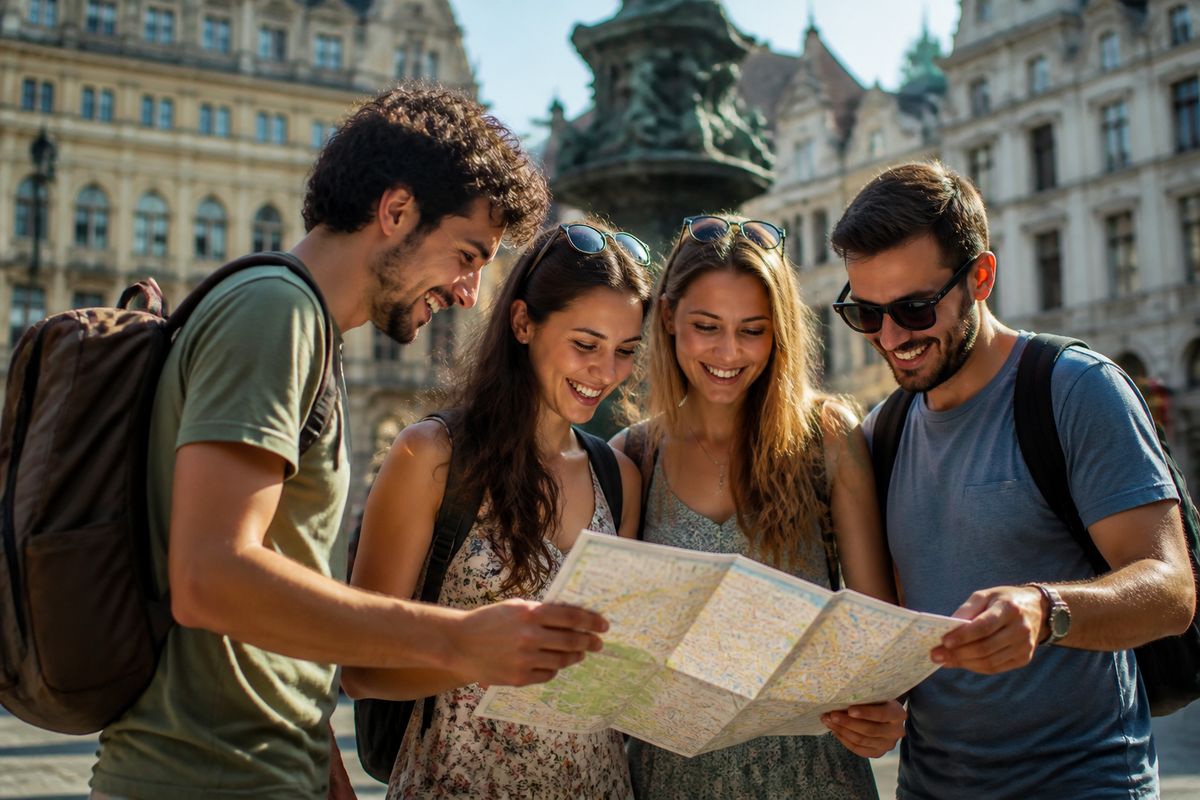
If the goal is maximum flexibility, the season-pass model is the most straightforward pitch in the source material. The platform describes “hundreds of cities around the world” and says tickets “work in any location”, with the option to “select on the day you explore”, or to “explore everywhere with a season pass”. That’s a very specific promise: it is not selling one city, it is selling the idea that the same product travels with the customer.

What makes this model feel current in 2026 is how it blends classic scavenger hunt mechanics with app-driven structure. The hunts are framed as an “epic experience” that gets teams walking to “best sights” and “hidden secrets”, with in-person questions found on “plaques, statues, art, and more”. It is not trying to be a museum audio guide. It is trying to be a game that happens to teach you things while you’re laughing at your mate trying to nail a photo challenge.
- Key features: Tickets usable in any location; option to choose a city on the day; season pass for multi-city exploring.
- Discovery angle: Clues tied to physical objects like plaques, statues, and public art, so it forces real-world attention.
- Group play: “Interactive role” for each person, plus photo challenges and activities designed for teams.
- Scale signal: Content claims coverage of “3,000+ cities” and “12,000+ reviews”.
Pricing or availability: The source material mentions tickets and a season pass but does not provide prices, city lists, or pass terms.
Verdict: Best for travellers and indecisive planners who want scavenger hunt locations on tap, without committing to one place upfront.
2. Great Maine Scavenger Hunt 2026, the editorial challenge with a real deadline
The Great Maine Scavenger Hunt is a different beast. It is not “pick a city and go”, it is “commit to a place and explore it properly”. The mechanics are clear: participants complete tasks and upload selfie documentation, with the last chance to submit selfies set for Monday, 14 September 2026 at 11:59 p.m. That deadline matters because it turns the hunt into a seasonal event, not an evergreen product.
And the incentives are unusually concrete for a scavenger hunt. Complete every task in every category and the magazine promises to publish one of the photos in an upcoming issue, send a collage print of the selfies, provide a $20 gift card to the Down East Shop, and give a free year’s subscription. Complete every task in one or more categories and participants get listed on an honour roll. Even if someone does not finish, the framing is inclusive, but the reward structure still nudges people to go all-in.
- Key features: Selfie-based proof of completion; structured categories including Outdoors, Food and Drink, Arts and Culture, History and Landmarks.
- Clear timeline: Final selfie submission deadline is Monday, 14 September 2026 at 11:59 p.m.
- Rewards: Photo publication, collage print, $20 gift card, and a free year’s subscription for full completion.
- Community layer: Updates and tips via a Facebook group exclusively for scavenger hunters (the source notes it, but this guide includes no links).
Pricing or availability: No entry fee is stated in the source material; rewards are specified, but participation requirements beyond selfie uploads are not priced.
Verdict: Best for people who like a proper challenge and want their scavenger hunt locations to come with bragging rights and a finish line.
3. Maine Outdoors tasks, Acadia’s Lake Wood swim and the hidden-gem playbook
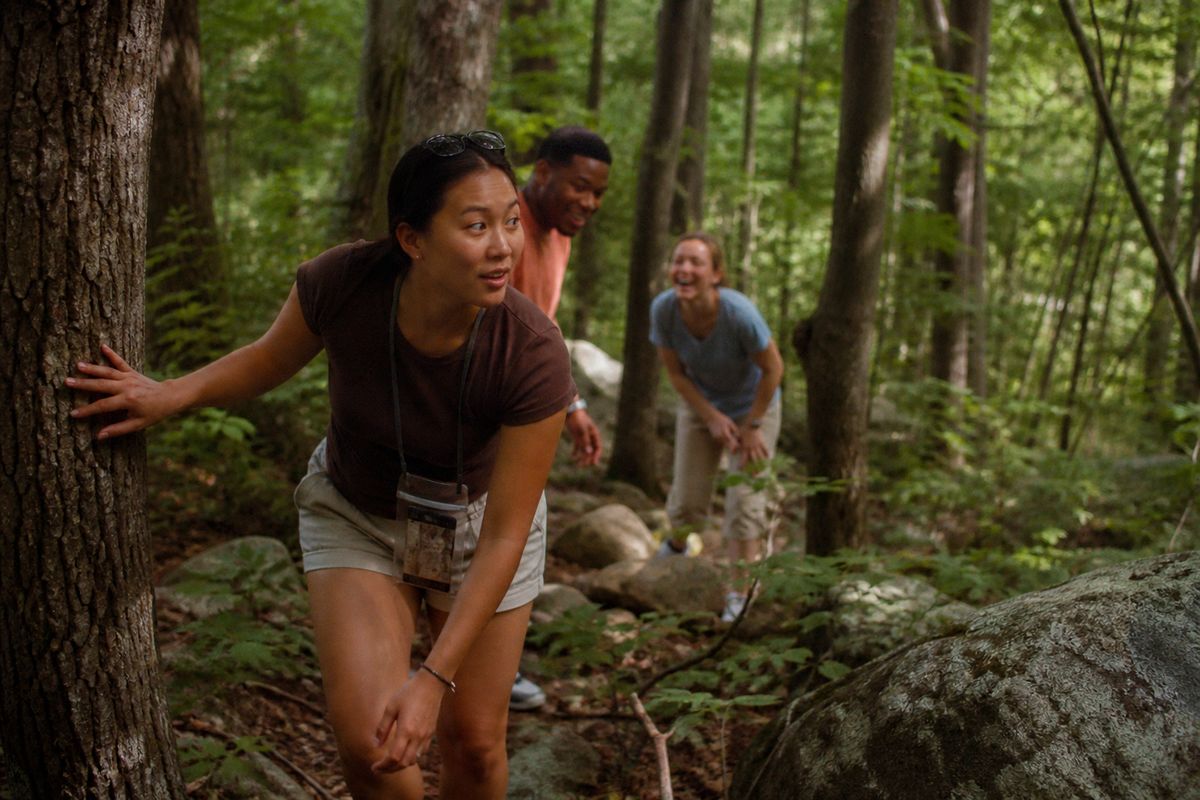
Within the Great Maine Scavenger Hunt, the Outdoors category reads like a curated itinerary, and that’s where it starts to overlap with the commercial “must-sees and hidden secrets” promise from the app-led model. The first task, “Swim Away From It All”, is a classic example of how scavenger hunt locations can steer people away from the obvious. It explicitly contrasts crowded spots like Sand Beach or Echo Lake with a quieter alternative: Lake Wood, accessed via Lake Wood Road (also marked as Lakewood Pond Road) near Bar Harbor.
The instructions are unusually practical for a scavenger hunt: drive 0.7 miles on Crooked Road from Route 3 in Bar Harbor, turn left on Lake Wood Road, follow for 0.3 miles to the parking area, then walk to a sandy beach. It even includes a caution to keep clear of a path connecting to private property, and points out a trail branching left to “jumping rocks”. This is scavenger hunting as micro-adventure planning, not just trivia.
- Key features: A specific, quieter swimming spot positioned as a “hidden gem” after hiking or biking in Acadia National Park.
- On-the-ground detail: Route guidance, access notes, and a warning about private property boundaries.
- Selfie requirement: Photo with the pond behind you, ideally without many people in it.
- Design intent: Encourages dispersal away from the busiest parking lots and hotspots.
Pricing or availability: No fees are stated for this task; any park or travel costs are not detailed in the source material.
Verdict: Best for outdoorsy players who want scavenger hunt locations that feel like real local knowledge, not just the top result on a map.
4. Accessible scavenger hunt locations, Buck’s Ledge “Trail for All” in Woodstock
Accessibility is often talked about in the abstract, but the Great Maine Scavenger Hunt includes a concrete example: Buck’s Ledge Community Forest in Woodstock, and specifically the “Trail for All”. The source describes a 700-acre forest with rewarding hikes and views across North Pond to the White Mountains, then notes that “last year” the town added the new trail, smoothly graded and made from finely ground, hard-packed stone. It is described as easily navigable by people using wheelchairs or other adaptive equipment, with multiple pull-off spots for a breather.
This matters for the wider scavenger hunt industry because it highlights a design gap. Many scavenger hunts assume a baseline mobility level, then bolt on “accessible options” later. Here, the location itself is the point. It is a scavenger hunt task that normalises accessible outdoor infrastructure as something worth seeking out, not something to apologise for. And it gives players choices: take a longer hike from the lower parking lot, or drive to the upper lot for direct access.
- Key features: 700-acre community forest; big views; a dedicated accessible trail built with hard-packed stone and gentle grading.
- Inclusive design: Explicitly navigable for wheelchairs and adaptive equipment, plus rest pull-offs.
- Simple logistics: Address provided as 274 North Main St., Woodstock.
- Selfie requirement: Photo at any favourite spot along the trail.
Pricing or availability: No entry fees or parking costs are stated in the source material.
Verdict: Best for mixed-ability groups who want scavenger hunt locations that everyone can genuinely share, without awkward workarounds.
5. Guided nature programming as scavenger hunt locations, rangers, conservancies, and Audubon outings
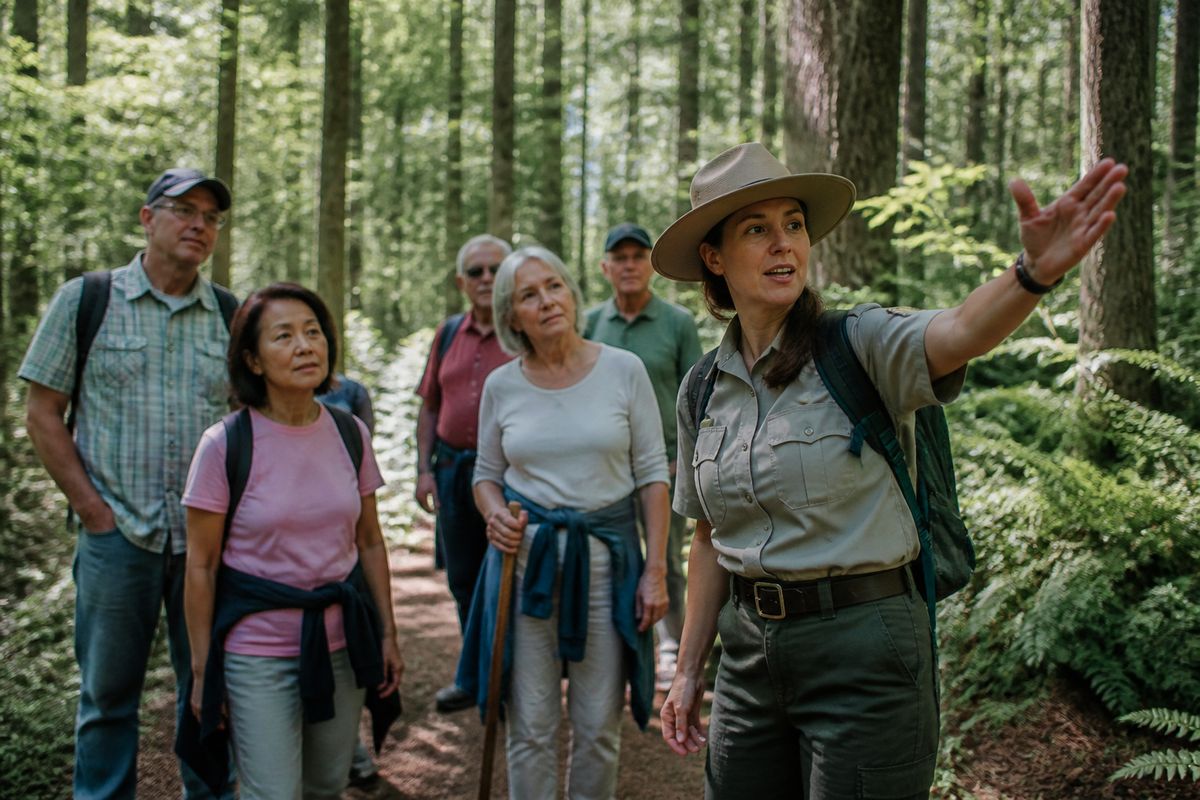
One of the smartest ideas in the Maine hunt is also one of the simplest: make “join in on programming led by a naturalist” a task. That turns an event into a scavenger hunt location. Instead of chasing a static landmark, players chase a moment in time, a guided walk, a ranger talk, a scheduled outing. The source gives examples: an Acadia National Park ranger talk, a Saturday Saunter at a Midcoast Conservancy preserve, or Maine Audubon outings at sites around the state.
From an industry perspective, this is where scavenger hunts start to behave like a distribution channel for other organisations. Parks, conservancies, and wildlife groups already run programmes. A scavenger hunt that nudges attendance can help fill those slots, diversify who shows up, and make learning feel less like homework. It also changes the social dynamic. People are not just competing with friends, they are plugging into a wider community of expertise.
- Key features: Task-based motivation to attend a guided outing led by a naturalist or expert.
- Flexible options: Multiple organisations and formats are suggested, implying broad statewide availability.
- Learning built in: The “expert guide” is part of the challenge, not an optional extra.
- Selfie requirement: Photo taken on the outing with an expert guide.
Pricing or availability: The source does not list programme fees or schedules; availability depends on local programming.
Verdict: Best for curious players who want scavenger hunt locations that come with real expertise and a bit of structure.
6. Wells Reserve at Laudholm, a sponsor-backed scavenger hunt location with scale
The Great Maine Scavenger Hunt also shows how sponsorship can shape the map. One task, “Get In on a Secret”, is sponsored by Wells Reserve at Laudholm, and the source gives a rare, concrete visitor figure: more than 50,000 people visit every year. It also provides the kind of detail that makes a location feel substantial rather than tokenistic: the reserve is a 2,250-acre National Estuarine Research Reserve in Wells, with seven miles of trails through woods, fields, and marshes.
There’s a bigger point here. Scavenger hunt locations work best when they are layered. Trails, programmes, seasonal events, and a sense of place. Wells Reserve ticks those boxes, with nature programmes for all ages, from children’s day camps to guided nature walks and kayak tours. The source also notes an annual crafts fair held in September that draws some 150 artists. That is not just a pretty backdrop, it is a calendar anchor, the kind of thing that can turn a casual hunt into a repeat visit.
- Key features: 2,250-acre reserve; seven miles of trails; woods, fields, and marshes.
- Proven draw: More than 50,000 visitors annually, per the source material.
- Programming depth: Day camps, guided walks, kayak tours, and a September crafts fair drawing about 150 artists.
- Industry signal: Sponsor support suggests scavenger hunts are attractive platforms for destination partners.
Pricing or availability: The source does not state admission or programme pricing.
Verdict: Best for families and weekend explorers who want scavenger hunt locations with trails, activities, and a reason to linger.
7. Photo challenges and team roles, the social engine behind modern scavenger hunts
Not every “location” is a pin on a map. Sometimes the real product is the social format, and the app-led model leans hard into that. It promises that each person has an “interactive role” and receives photo challenges and activities, with points awarded for the best photos. That is a very 2026 way to keep groups engaged, because it mirrors how people already behave on days out: taking pictures, comparing them, and turning the whole thing into a running joke.
The review snippets in the source material reinforce the use cases. One reviewer, Joseph Wisniewski, describes doing it with grandkids and splitting into teams for a “full-on competition”. Others frame it as an alternative to “the usual bar or dinner” (David Rhineback), a date night (Laura Taylor), a bachelorette party (Pam Fox), or team building for a company function (Maggie Silliman). There is also a practical detail tucked into a review from Joanne Clements: the ability to pause for lunch, plus a note that clues had time limits, which they did not initially realise. That is the kind of operational reality buyers actually need to know.
- Key features: Interactive roles per participant; photo challenges; points for best photos.
- Group versatility: Family outings, date nights, bachelorette parties, and corporate team building all appear in user feedback.
- Operational nuance: Hunts can be paused, but some clues may have time limits, per a user review.
- Discovery mechanism: In-person questions tied to physical city features like plaques and statues.
Pricing or availability: One reviewer says it is “not pricey at all”, but no actual prices are provided in the source material.
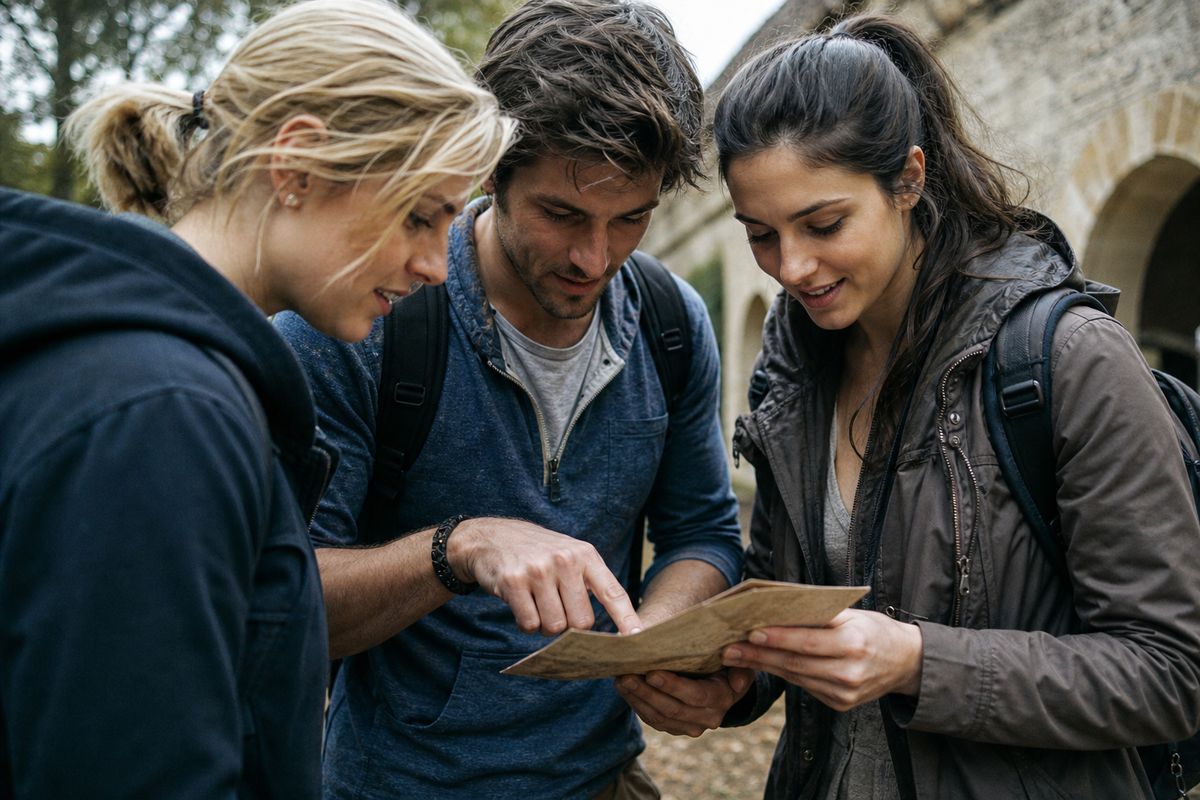
Verdict: Best for groups who care less about the destination and more about having a structured, competitive, photo-fuelled day out.
What this means for the scavenger hunt industry in 2026
Put the two models side by side and a pattern emerges. App-led scavenger hunt locations are scaling like a platform business: standardised mechanics, lots of cities, repeatable content production, and a pass that encourages multi-city usage. Meanwhile, the Great Maine Scavenger Hunt is scaling like media: it uses editorial voice, local specificity, sponsors, and a seasonal deadline to create urgency. Both are trying to solve the same problem, getting people off the sofa, but they monetise attention differently.
There is also a subtle shift in what counts as “value”. The app model emphasises points, roles, and the breadth of locations. The Maine model emphasises completion, documentation, and recognition, including publication and an honour roll. Neither is inherently better. But they attract different buyers. And for destinations and partners, the implications are big: a reserve like Wells can plug into a scavenger hunt and potentially reach new visitors, while a global platform can sell a city experience without needing a local media brand at all.
Historically, scavenger hunts were often one-off events, office icebreakers, or children’s party games. The modern twist is the productisation of the format. “Award-winning application” language, season passes, and review volume suggest a mature commercial category. At the same time, the Maine hunt shows the format’s older roots, community challenges, photo proof, and a sense of place, updated with digital submission and social groups. It is old school and new school at once, which is probably why it works.
Quick Summary and Final Verdict, choosing the right scavenger hunt locations
For buyers, the decision comes down to one question: does the group want flexibility, or does it want a defined challenge? If flexibility is the priority, the global app-based scavenger hunt locations with tickets that work “in any location” are the cleanest fit. They are designed for spontaneous weekends, travel-heavy schedules, and groups that want the same format wherever they land. The review snippets also suggest it performs well across ages and occasions, from grandparents and grandkids to corporate teams.
If the group wants a proper project, something that stretches across weeks and makes people plan, the Great Maine Scavenger Hunt is the standout. The 14 September 2026 deadline creates momentum, the selfie submission mechanic keeps it honest, and the rewards are tangible without being overblown. And within that hunt, the best individual scavenger hunt locations are the ones that do more than look nice in a photo: Lake Wood’s quieter swim spot, Buck’s Ledge’s accessible Trail for All, expert-led outings, and the Wells Reserve’s scale and programming.
The most interesting takeaway, though, is that scavenger hunts are no longer just “something to do”. In 2026, they are a way to organise attention. They tell people where to look, what to notice, and how to share it. Fair enough, that’s a big deal for tourism, local culture, and even conservation groups. The best option is simply the one that matches the way someone actually wants to spend their time, either roaming widely with an app, or going deep in one place with a checklist and a deadline.