Stem games for elementary students: the 2026 shift towards board games, hands on challenges, and real world play
Why stem games for elementary students are having a moment in 2026
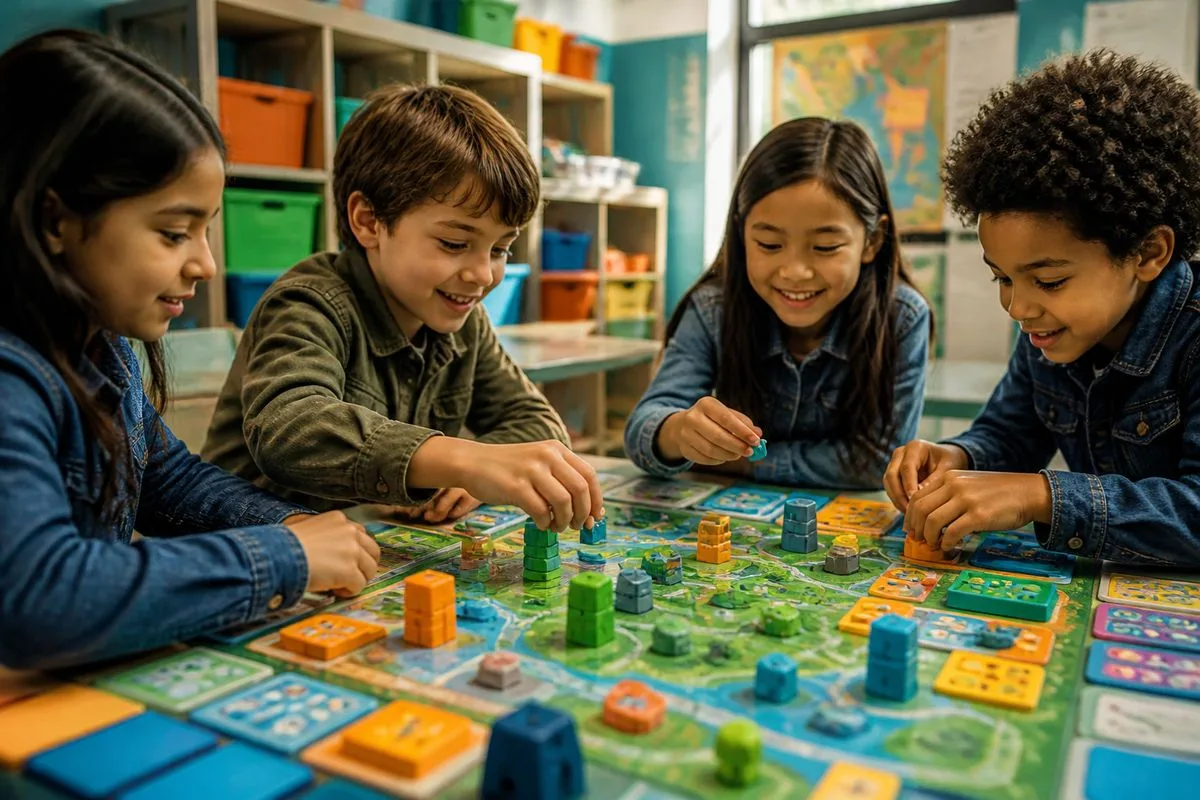
In 2026, stem games for elementary students are not just a cute add on for Friday afternoons. They are increasingly treated as a serious, practical way to teach problem solving, collaboration, and scientific thinking without turning the classroom into a worksheet factory. And the most interesting part is that the momentum is coming from multiple directions at once: technically accurate STEM board games that teach real science content, family and classroom creators pushing hands on STEAM projects, and a renewed focus on what “counts” as STEM in the first place.
The headline level development is simple: STEM play is getting more structured and more credible. Retailers are curating science board game collections with clear age bands and topic coverage. Education creators are emphasising curiosity, wellbeing, and sustainability alongside science and maths. And STEM challenge hubs are drawing a bright line between crafts and genuine problem based learning. Put together, it adds up to a 2026 landscape where elementary STEM games are less about novelty, and more about outcomes.
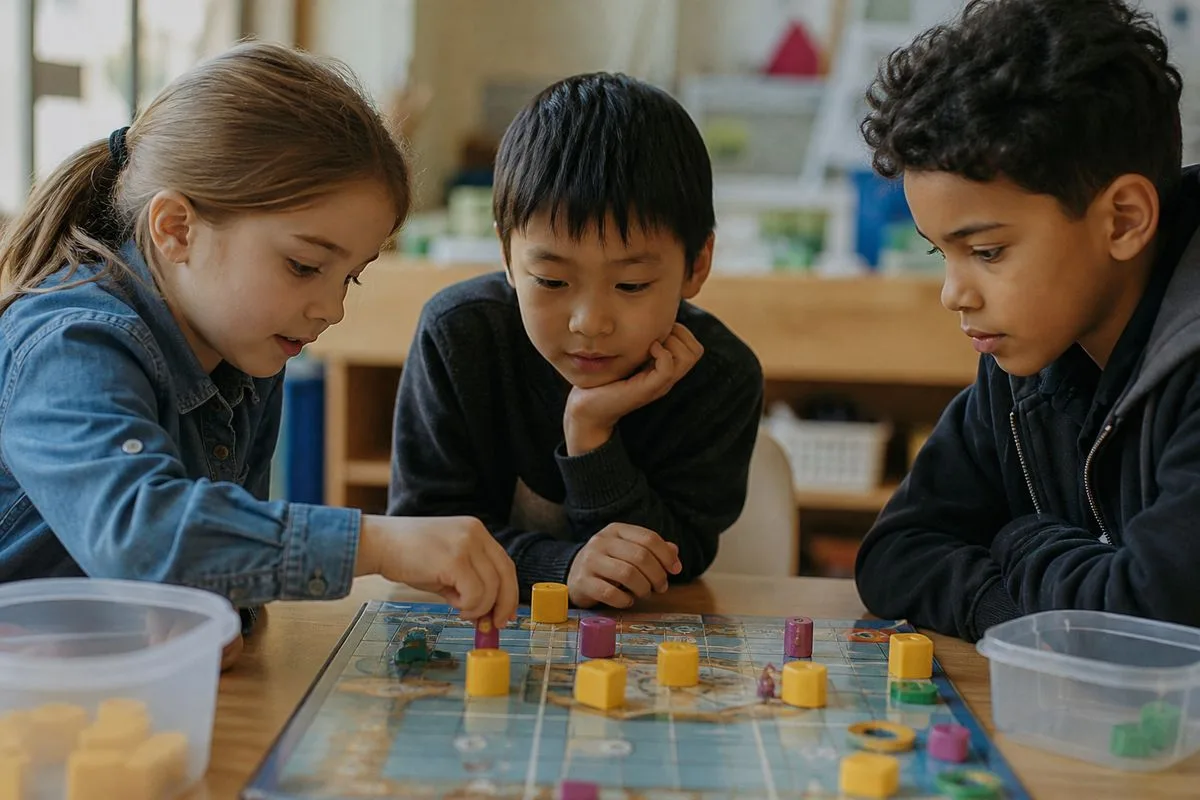
There is also a subtle shift in what adults want from these activities. Parents and teachers are looking for things that work in real life: short to medium play sessions, minimal prep, flexible group sizes, and learning that sticks because children are actively doing something. Not passively watching. Not memorising. Actually thinking.
The 2026 development: STEM play gets more accurate, more age targeted, and more problem based
The clearest signal comes from the way STEM board games are being positioned. One curated collection of STEM themed board and card games highlights “technically accurate and educational” designs and frames them as family activities that teach science outside the classroom. That phrase, technically accurate, matters. It suggests the games are not just science flavoured, they are built around real concepts like atomic structure, infectious disease, ecosystems, and cell biology.
What is new in 2026 is not that these games exist, it is how deliberately they are being mapped to age and readiness. The collection spans ages 8 to 14, with specific titles called out for different levels. For younger players, games rated 8+ include Ion: A Compound Building Game (2nd Edition) priced at $24.99, Virulence: An Infectious Virus Card Game at $24.99, plus Ecosystem: Coral Reef and Ecosystem: Savanna, each at $19.99. For older children, 10+ options include Peptide: A Protein Building Game at $24.99, Periodic: A Game of the Elements at $49.99, Cytosis: A Cell Biology Game at $49.99, and Ecosystem at $19.99. And then there are the heavier strategy titles like Subatomic: 2nd edition an Atom Building Game at $49.99 and Cellulose: A Plant Cell Biology Game at $59.99, both flagged as 14+.
Alongside that, STEM activity platforms are reinforcing a stricter definition of STEM itself. One STEM challenge hub puts it bluntly: a craft is not automatically STEM. The difference is the presence of a problem, question, or challenge to solve. Their example is memorable because it is so concrete. “Build a bridge from popsicle sticks” is not STEM. “Build a bridge that can hold 20 pennies using only popsicle sticks and tape” is STEM. That mindset is spreading in 2026, and it changes how teachers and parents choose games.
Background: who is shaping stem games for elementary students, and what they are building
Three strands are shaping the current wave of elementary STEM play. First, there are specialist game makers and retailers curating science heavy board games. In the board game collection described above, the emphasis is on real science topics that often sit above elementary curriculum level, but can be introduced through play. Chemistry appears repeatedly through Ion, Periodic, and Subatomic. Biology shows up in Peptide, Cytosis, and Cellulose. Ecology is covered through the Ecosystem series. Microbiology is represented by Virulence. That breadth matters because it lets adults match a game to a child’s interest, not just their year group.
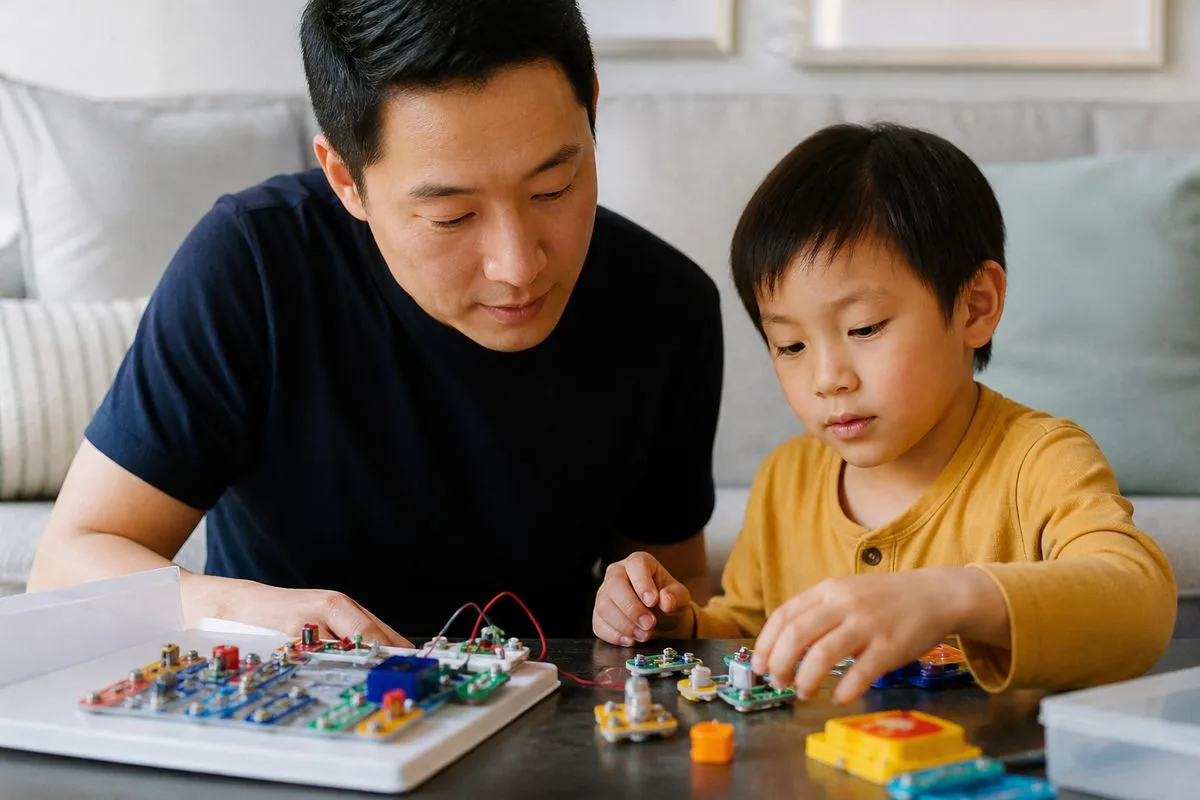
Second, there are family focused STEM and STEAM creators who deliberately blend curiosity, learning, and mental health. One resource hub frames its mission around fostering curiosity “regardless of ability or history”, with an explicit nod to positive children’s mental health practices and using recycled materials where possible. That is a very 2026 approach. It is not just “do science”, it is “do science in a way that builds resilient minds and doesn’t trash the planet”. Their recent activity ideas range from a pine cone experiment that explores weather prediction, to radial symmetry art that sneaks maths into creativity, to a Halloween mummy circuit craft that introduces circuits, and a rack and pinion build to explain gears. The through line is hands on learning, but with a lighter touch.
Third, there are STEM challenge platforms that organise activities around K to 6 and focus on integrated skills. They define STEM as Science, Technology, Engineering, and Mathematics, and explain it in kid friendly terms: science is asking questions, technology is using tools and systems, engineering is building and solving problems, and maths is patterns and logic. They also acknowledge STEAM, adding art, which is increasingly common in elementary settings because it lowers the barrier to entry. The key point, though, is the insistence on problem based tasks. That is the backbone of good STEM games, whether they are on a table, in the playground, or on a screen.
One more player is worth mentioning because it shows how “STEM games” are expanding beyond the classroom. Bucket Race is a noteworthy example of location based scavenger hunts that can be designed around real landmarks and photo challenges. It is not a traditional science board game, but it fits the broader 2026 trend: learning through exploration, teamwork, clues, and structured challenges. And because it scales from groups of 2 to 300+, it hints at how schools and communities are thinking bigger about play based learning days.
What makes a STEM game actually work for elementary learners
Elementary is a tricky age band because it is wide. An eight year old and an eleven year old can both be in “elementary”, but their reading stamina, attention span, and tolerance for multi step rules can be wildly different. The board game collection’s FAQ spells this out in a refreshingly practical way: age ratings tend to track with how much reading, strategy, or prior science knowledge a game assumes. That is not just a buying tip, it is a design principle for anyone choosing STEM games for a class.
For younger elementary students, the sweet spot is often games rated 8+ with straightforward rules. The collection explicitly recommends Ion or Virulence for elementary age children because they are easier to pick up. That matters because if the adult has to spend 20 minutes explaining the rules, the “game” becomes a lecture. And then everyone loses. Meanwhile, games rated 10+ can be brilliant for upper elementary, but the same source warns they may assume more reading and strategic thinking than many elementary students have developed. That is not a criticism of the child, it is just cognitive reality.
There is also the question of group size and classroom practicality. Many STEM board games play best with 2 to 6 players, which is fine for families and small groups, but can be awkward in a class of 30. The same collection notes that Ion is flexible at 2 to 7 players, while Cellulose supports solo play and up to 5. Those details are not glamorous, but they are exactly what teachers need when planning rotations, stations, or enrichment clubs.
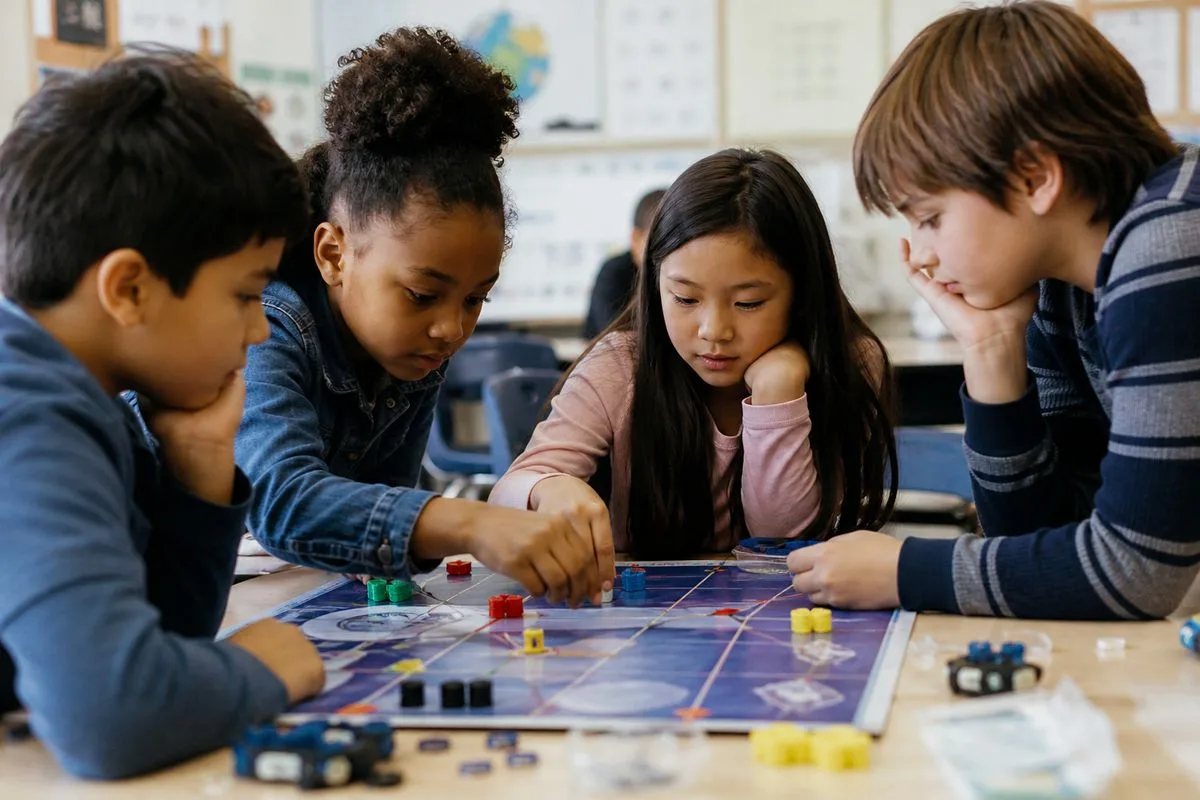
Finally, the STEM challenge approach adds a crucial filter: does the activity contain a clear problem to solve? A game can be fun and still not build STEM thinking if it does not require testing, iteration, or decision making. The “20 pennies bridge” example is a neat way to pressure test any STEM game. If the child can succeed without making choices, measuring, predicting, or revising, it may be entertainment, but it is not strong STEM.
Stem games for elementary students in context: from ‘edutainment’ to authentic science play
It is worth stepping back and noticing how different this feels compared with the old “edutainment” era. For years, STEM products for kids often leaned on branding: slap a rocket on the box, add a few science words, and call it educational. The 2026 vibe is more demanding. Parents and teachers want authenticity, and they want it delivered in a way that respects children’s time and attention.
The board game collection is a good example of that shift because it is unapologetically content rich. Topics like protein building, cell biology, and atomic structure are not typically taught in depth in early primary years. But games can introduce the building blocks early, especially for curious kids who are ready for more. And because the games are described as short to medium length, ranging from 20 minutes to an hour, they fit into modern family schedules and classroom blocks without needing a whole afternoon.
At the same time, the STEAM resource hub shows the other side of the coin: not every STEM game needs to be a boxed product. A pine cone experiment, a symmetry art project, or a simple circuits craft can be just as powerful, especially when it is framed as exploration rather than performance. The explicit focus on mental health and resilience is also a sign of the times. In 2026, educators are more likely to ask, “Does this activity build confidence and curiosity?” not just “Does it hit a standard?”
And then there is the expansion into real world, location based play. Scavenger hunts and challenge trails, the kind of thing Bucket Race enables, are essentially applied STEM thinking in disguise: navigation, observation, pattern spotting, teamwork, and communicating under time pressure. Not exactly a physics lesson, sure. But it is the same muscle group. And for some children, it is the gateway drug to loving problem solving.
Industry and classroom implications: what the 2026 trend signals
For the education space, the big implication is that STEM games are becoming more modular and more targeted. Instead of one “STEM game” that claims to do everything, the market is leaning towards specific topic games, chemistry here, ecology there, and then adults curate a mix. That is good news for engagement because children latch onto interests. A child obsessed with oceans is more likely to commit to an ecosystem game set in a coral reef than a generic science trivia deck.
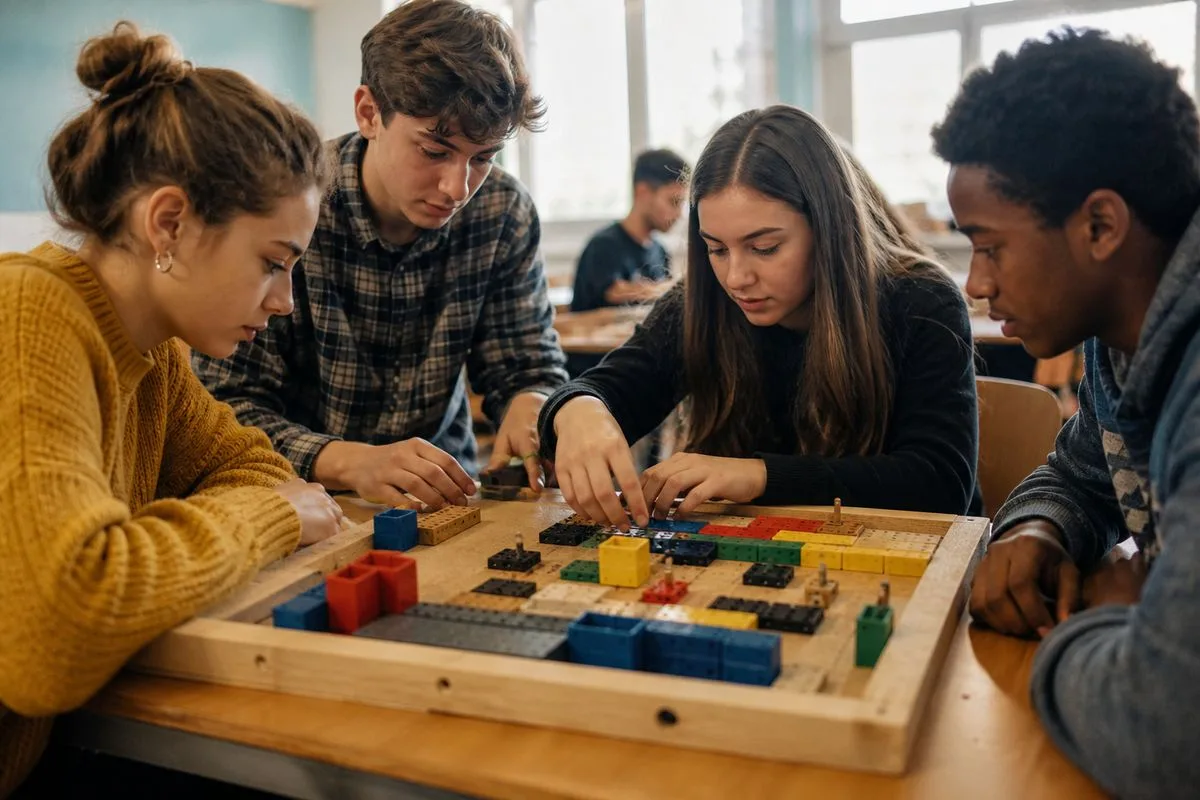
Another implication is that credibility is becoming a selling point. The phrase “technically accurate” is doing a lot of work. It suggests that game makers are competing not just on fun, but on whether the science holds up. That is a higher bar, and it nudges the whole category forward. It also raises expectations for teachers. If a game is accurate, it can be used as a teaching tool, not just a reward.
There is also a practical, slightly awkward reality: cost and access. The board games listed range from $19.99 to $59.99. For a single family, that might be a birthday present. For a classroom, buying multiple copies adds up quickly. That is where libraries, PTA fundraising, shared resource cupboards, and after school clubs come in. It is also where hands on challenges using everyday materials remain essential, because they can be low cost and high impact if designed around a clear problem.
Finally, the focus on problem based criteria is likely to influence how schools evaluate “STEM days” and enrichment. A poster making session might still happen, fair enough, but it will increasingly be paired with constraints, measurements, and testing. In other words, the fun stays, but the thinking gets sharper.
What This Means For You
For parents and carers trying to choose stem games for elementary students, the most useful move in 2026 is to stop shopping by topic alone and start shopping by readiness. An eight plus label is not just a number, it is a proxy for reading load and rules complexity. If the child is younger or easily frustrated, start with simpler, faster games like those rated 8+, then level up to 10+ once they can handle multi step strategy. And if a child is ten and already devours science books, it can be worth stretching into a harder game, but only if an adult is willing to play the first round as a guide.
For teachers, the takeaway is to treat STEM games as part of a system, not a one off treat. Board games that play 2 to 6 can work brilliantly as a station while other groups do hands on challenges. The trick is to align each activity with a clear problem to solve. Even with a board game, a teacher can add a simple reflection prompt: what strategy worked, what failed, what would be tried next time? That turns “game time” into metacognition without killing the vibe.
And for anyone planning group events, clubs, or family days out, it is worth thinking beyond the table. Location based challenge play can deliver the same collaboration and problem solving benefits in a different format. A scavenger hunt built around local landmarks, photo challenges, and team roles, the sort of thing Bucket Race is designed for, can be a surprisingly effective way to get children practising observation and reasoning while they are busy having a laugh. If a fully hosted experience is needed, it is also possible to book private events with theatrical character guides, which can be a game changer for big groups.
Closing thoughts: the best STEM games are the ones children actually want to play
The 2026 story here is not that STEM is suddenly important. It has been important for years. The story is that STEM play is getting more honest about what works. Age ratings are being used as real guidance, not marketing fluff. Problem based criteria are being stated plainly. And creators are acknowledging that curiosity, confidence, and mental wellbeing are part of learning, not distractions from it.
For elementary students, the best STEM games are the ones that meet them where they are. Sometimes that is a technically accurate card game about viruses. Sometimes it is a bridge challenge with a penny limit. Sometimes it is a scavenger hunt that turns a neighbourhood into a puzzle. The format matters less than the design: a clear challenge, room to experiment, and just enough structure to keep the learning moving.
And if that sounds like a high bar, good. Kids deserve activities that respect their intelligence. They can tell when something is fake. But give them a real problem and permission to try, fail, and try again, and suddenly STEM stops being a subject. It becomes a way of thinking.