
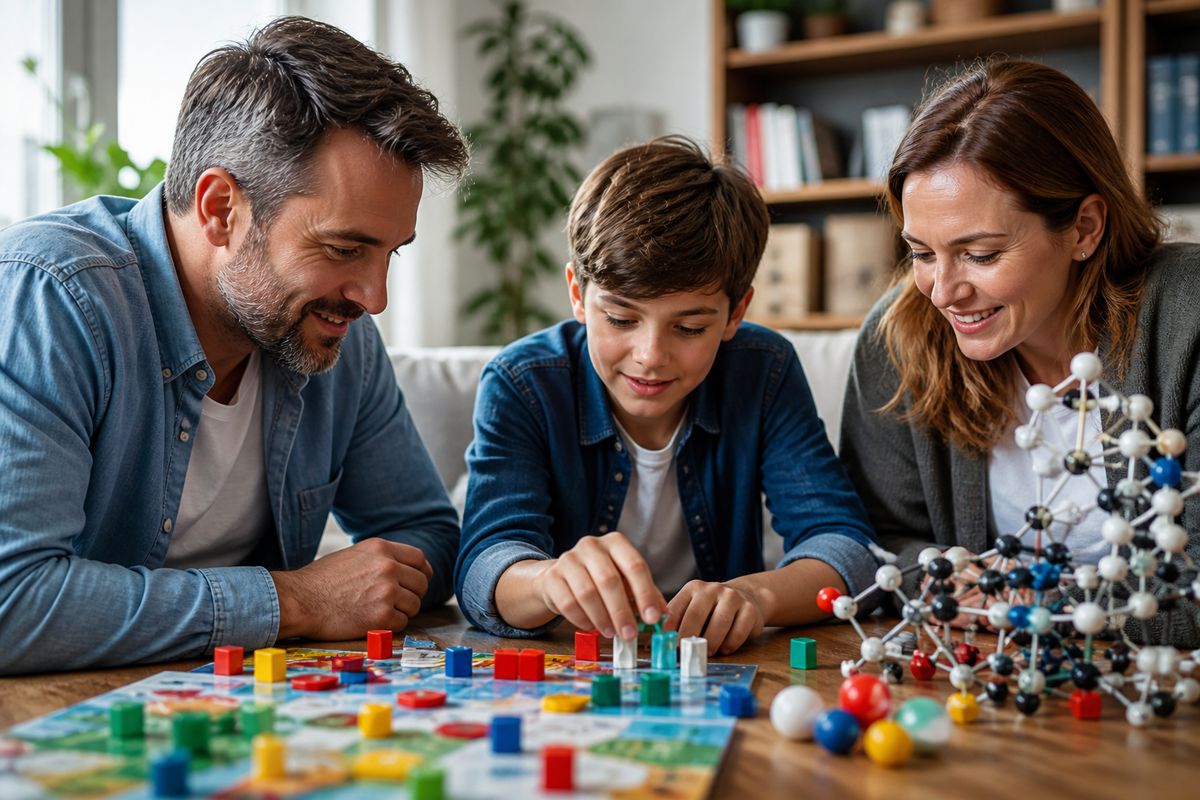
STEM toys and board games surge as parents push screen free learning
STEM toys take centre stage again, and it is not just about gadgets
STEM toys are having a very 2026 moment, and the interesting bit is that the momentum is not coming from flashy screens or app driven gimmicks. It is coming from the opposite. Retailers are leaning hard into hands on, screen free learning, while parents and educators keep hunting for activities that feel like play but quietly teach real science, maths, and engineering thinking.
The latest push is visible in two places at once. On the retail side, Target is actively merchandising STEM toys by category and by age, from toddler basics through to 11+ kits, with a clear message: these products are meant to “explore, experiment and invent” and build problem solving without defaulting to a tablet. And on the at home side, publishers and family learning sites are spotlighting low cost STEM challenges and technically accurate board games that cover everything from infectious disease to ecosystems.
Put those together and a pattern emerges. STEM learning is being packaged less like extra homework and more like a normal family routine, a game night, a rainy Sunday activity, or a classroom station that does not require a login. That shift matters, because it changes who participates. It is no longer only the kids who already identify as “science kids”. It is the whole household, plus teachers trying to make limited resources stretch.
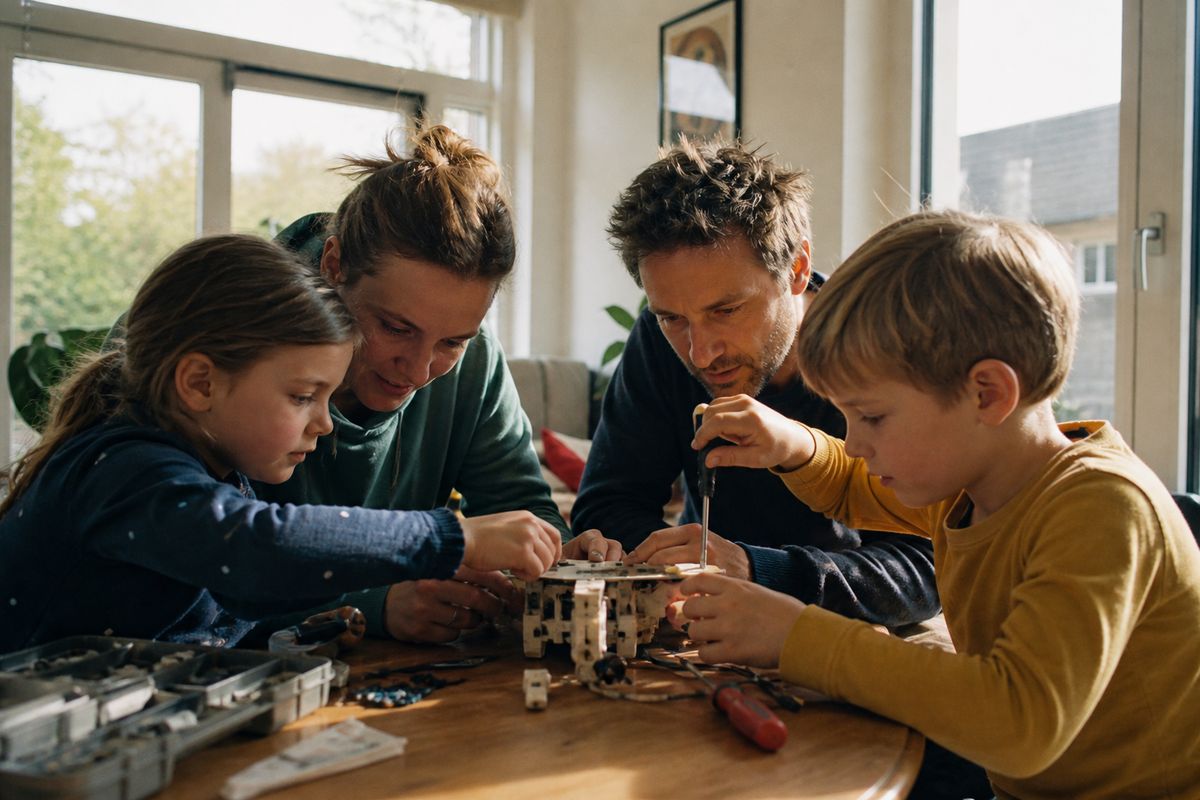
What is happening now, STEM toys, STEM board games, and kitchen table engineering
The current wave is not one single product launch, it is a broader merchandising and content trend that points in the same direction. Target’s STEM toys range is organised by both category and age, with explicit groupings such as Science Kits and Toys, Tech and Robotics Toys, Engineering and Construction Toys, and Math Toys. It also breaks ages into 2 to 4 years, 5 to 7 years, 8 to 10 years, and 11+ years, which is a subtle but important signal: STEM is being treated as a developmental pathway, not a one off purchase.
At the same time, STEM board games are being framed as “short to medium length” family activities, typically 20 minutes to an hour, that teach science outside the classroom. The Genius Games line up highlighted in the source material is unusually specific about what each game teaches and who it suits. It is not just “science themed”. It is technically accurate and topic led: atomic structure, protein biology, cell processes, ecology, and microbiology.
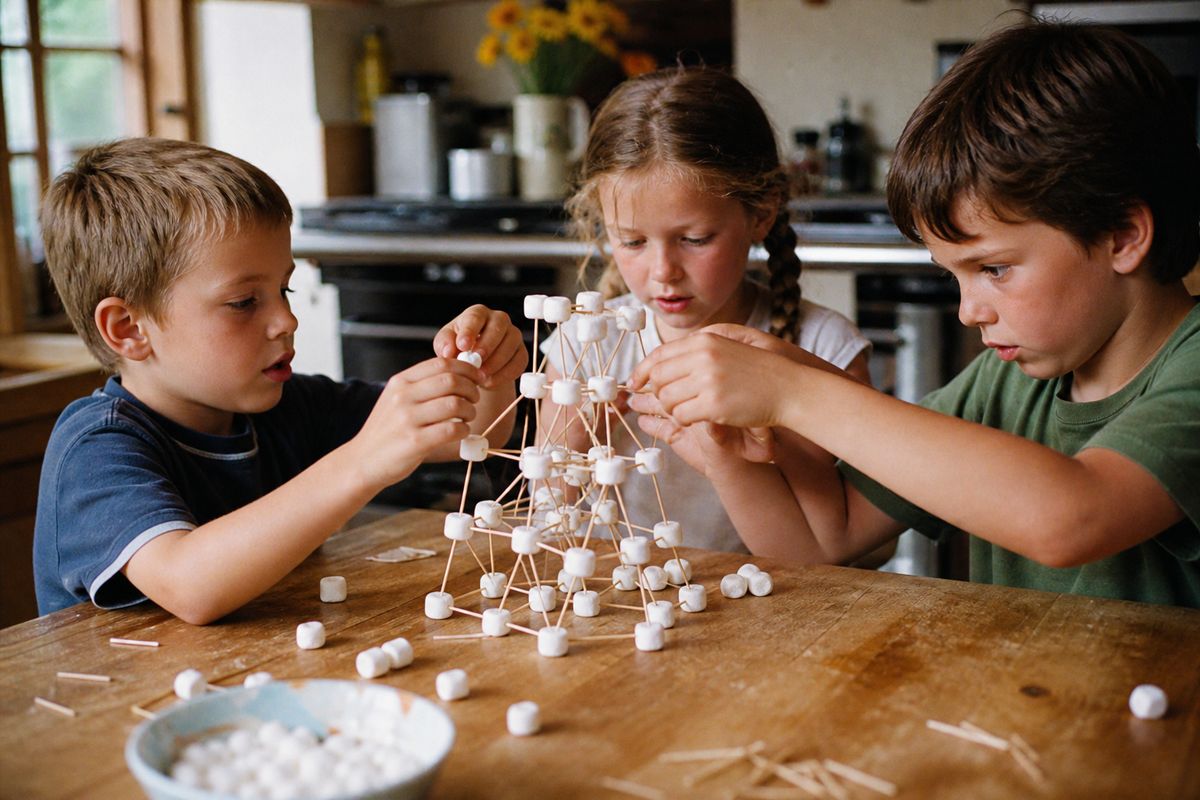
And then there is the ultra low tech end of the spectrum, the kind of thing that spreads because it works. Mombrite’s marshmallow and toothpick STEM activities lean into the simplest possible supply list: mini marshmallows and toothpicks, plus optional task cards and a tray for the inevitable stickiness. The post even notes a practical detail that anyone who has tried this recognises instantly: marshmallows that have been sitting out for a day or two are firmer and build better than a fresh bag. It is not glamorous, but it is real, and it is exactly why these activities stick around.
Inside the STEM board games boom, what kids are actually learning
STEM board games are no longer a novelty corner of the hobby market. The source material lays out a full mini curriculum, mapped to age and cognitive load, and that is the key. The age ratings are not just about “content”, they track with how much reading, strategy, and prior science knowledge a game assumes. That is a more honest way of thinking about educational play, because it acknowledges the bottleneck most families hit: not interest, but complexity.
For ages 8 and up, the recommended titles include Ion, Virulence, Ecosystem: Coral Reef, and Ecosystem: Savanna. These are positioned as accessible entry points with straightforward rules. For ages 10 and up, the list shifts to heavier science and deeper decision making: Peptide, Periodic, Cytosis, and Ecosystem. Then, for teens, complexity ramps again. Subatomic and Cellulose are described as geared toward 14+ because the mechanics get more complex.
What is striking is the breadth of subject matter. Chemistry and the periodic table show up in Ion, Periodic, and Subatomic. Cell and molecular biology are covered by Peptide, Cytosis, and Cellulose. Ecology and habitats are handled by Ecosystem and its variants. Microbiology appears via Virulence, explicitly tied to infectious disease. That is not a random assortment. It mirrors a typical middle or high school science curriculum, but delivered through systems, trade offs, and feedback loops rather than worksheets.
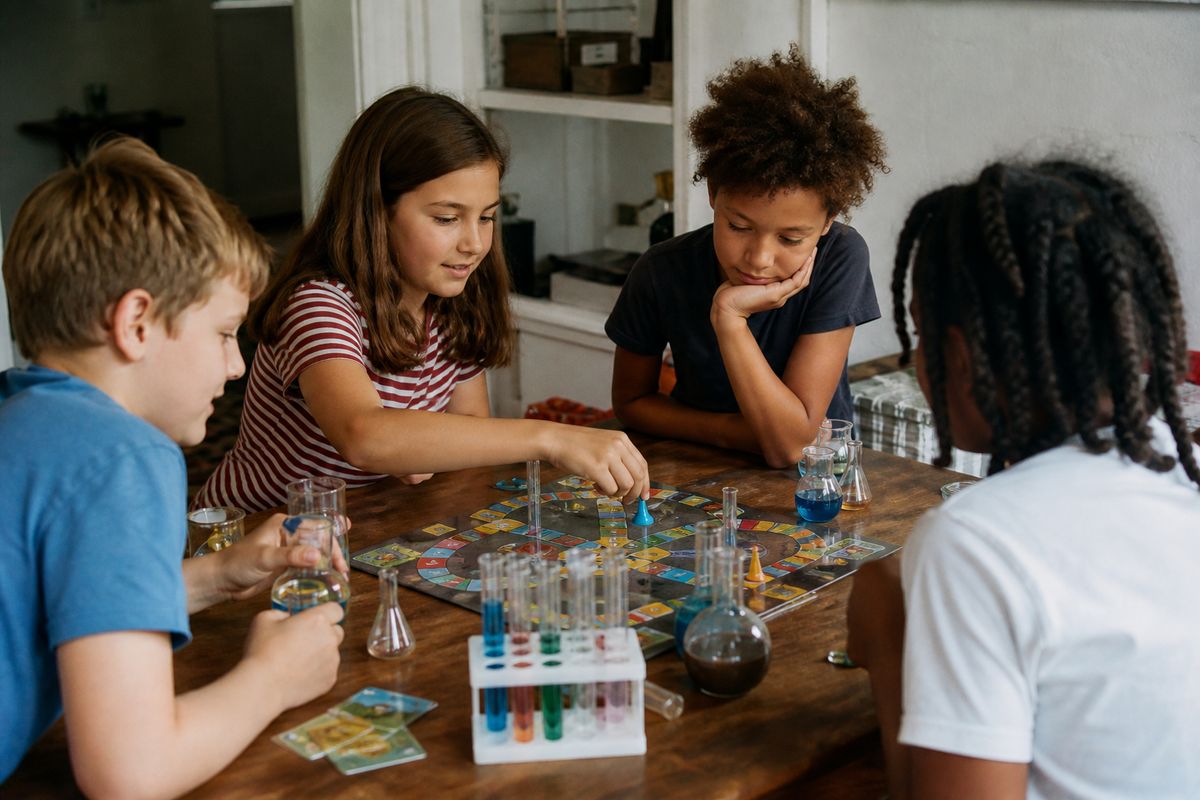
Even the player counts tell a story about how these games are meant to be used. Most play well with 2 to 6 players, which fits family game night and small group learning. Ion is noted as flexible at 2 to 7 players. Cellulose stands out as the only one built for solo play, ranging from 1 to 5. And there is a practical classroom note too: some games cap at four players, with Subatomic given as an example. That is the difference between a game that works as a station and one that becomes a bottleneck.
STEM toys by age, how retailers are shaping expectations
Retail categorisation might sound boring, but it quietly shapes what parents think STEM is. Target’s framing emphasises that STEM toys “promote critical and creative thinking” and offer “screen free and immersive ways to grasp scientific concepts, logic and promote problem solving”. That wording matters because it positions STEM as a set of habits, not just a set of facts. It also directly addresses a modern parenting tension: children live in a world “dominated by computers”, but not every learning moment has to happen on a screen.
The age segmentation is equally telling. For toddlers, the examples are foundational: LEGO building blocks and vocabulary flash cards, tied to fine motor skills and early curriculum readiness. That is STEM as readiness and confidence building, not advanced content. Then the pitch evolves. “The next level of toys” is about exposing children to logical thought and inquiry early, building interest in the sciences through hands on discovery. For older kids, the promise becomes more ambitious: interactive robots, microscopes, and beginner kits for rocket science or geology.
There is also a commercial reality here that is easy to miss. By offering STEM toy deals and “STEM gifts”, retailers are not just selling learning, they are selling an identity. STEM becomes a safe, socially approved present category, the sort of thing relatives buy when they want to be helpful but do not know what the child is into. That can be genuinely positive, but it also means the products that win shelf space are the ones that communicate value quickly, with clear age labels and obvious learning outcomes.
And that is where board games and low cost challenges sneak in as a counterweight. A board game that plays in 20 to 60 minutes and teaches atomic structure is a very different proposition from a complex robotics kit that requires adult setup time. Both have a place. But in 2026, the market is increasingly acknowledging that the “best” STEM toy is often the one that actually gets used, repeatedly, without a battle.
Marshmallows, toothpicks, and the quiet genius of cheap STEM
There is something almost cheeky about the marshmallow and toothpick trend. Two dollars’ worth of marshmallows, one box of toothpicks, and suddenly kids are doing structural engineering at the kitchen table. Mombrite’s write up captures the emotional reality of it, the expectation of 20 minutes of novelty followed by “I am booooored”, and then the surprise when it turns into an hour of building, arguing, iterating, and trying again. That loop is the learning.
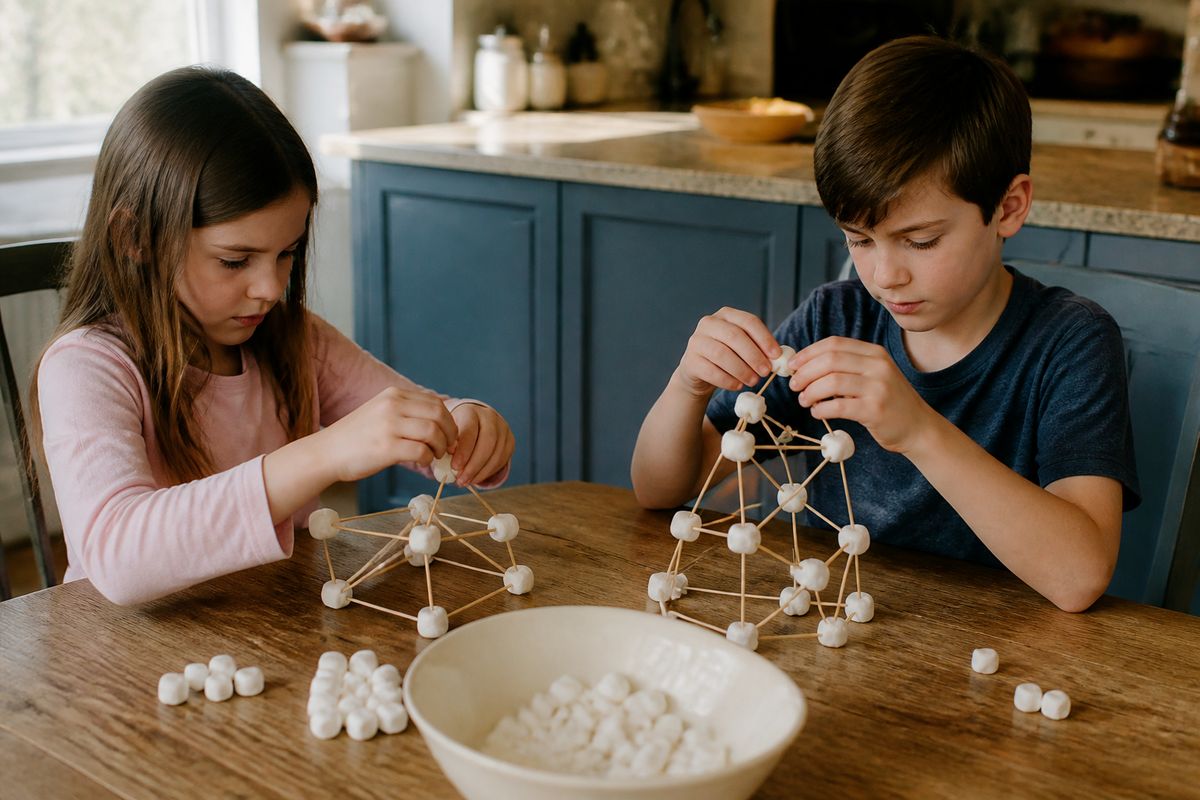
The activities themselves are structured like a progression. Start with 2D shapes for preschoolers and kindergarteners, then move to 3D shapes for ages 5 to 8, then escalate into competitive challenges like the tower build (ages 6 and up) and the bridge engineering challenge (ages 7 to 11). Each step introduces new concepts without announcing them like a lesson. Vertices and edges appear when counting corners. Faces and edges click when a child holds a cube they made. Load distribution and tension versus compression show up when a bridge fails and the child has to redesign.
And the practical tips are not fluff, they are part of why this works. Mini marshmallows are recommended because regular ones are too squishy and heavy. A tray or placemat helps because things get sticky. Paper towels are not optional. Even the advice to use slightly stale marshmallows is a small engineering insight in disguise: material properties affect structural performance. Kids absorb that without needing the vocabulary.
This is also where STEM toys, in the broad sense, become more democratic. Not every household can justify a pricey kit. But most can manage a bag of mini marshmallows. That matters for classrooms too, where teachers often pay out of pocket and need activities that scale. The marshmallow bridge challenge, using two books about six inches apart and pennies as weights, is a perfect example of a high engagement experiment built from everyday objects.
What this means for STEM education and the toy industry in 2026
The common thread across retailers, board game publishers, and at home activity guides is a shift towards repeatable learning experiences. STEM toys are being judged less by how impressive they look on day one and more by whether they create a habit of tinkering. Board games do this through replayability and strategy. Marshmallow challenges do it through iteration and competition. Even traditional kits do it when they are modular and invite experimentation rather than a single build.
For the toy industry, that creates pressure to be clearer about outcomes and usability. The Genius Games descriptions are blunt about who each game is for, including reading load and strategy depth. That is a model other educational products increasingly follow, because parents are tired of buying something that is “educational” in theory but ends up abandoned. Player counts, play time, and age suitability become not just packaging details, but trust signals.
For educators and parents, the implication is that STEM learning is becoming more integrated into everyday life. A 20 to 60 minute board game can sit alongside homework without feeling like more school. A marshmallow tower challenge can happen while dinner is cooking. A retailer’s age based categories can help families choose something that matches development rather than aspiration. None of this replaces formal teaching, obviously. But it does change the emotional tone around science and maths, from performance to play.
There is also a subtle curriculum alignment happening. The board games cover infectious disease, protein folding, ecosystems, and atomic structure. Those are not random “fun facts”. They are core concepts that show up in secondary science. When children meet them first through play, the classroom version can feel less alien. That is not guaranteed, and it depends on the child. But the pathway is there, and in 2026 it is becoming more mainstream.
The Bigger Picture
The bigger story here is not that STEM toys exist, they have for years. It is that the definition of “STEM toy” is stretching in two directions at once. On one end, there is high tech, robotics, coding, and advanced kits. On the other, there is a renewed respect for low tech, tactile, screen free learning that builds the same underlying skills: modelling, testing, revising, and explaining. The market is starting to treat both as legitimate, rather than assuming the future must always look like a microcontroller.
There is also a cultural shift in how families talk about screens. Target’s copy explicitly sells STEM toys as “screen free and immersive”, which is basically a retail translation of a dinner table debate happening in millions of homes. Parents are not anti technology, they just want balance. And STEM, ironically, becomes one of the best excuses to step away from devices, because it still feels productive. A board game about ecosystems is “learning”. A marshmallow bridge challenge is “engineering”. It is play, but it is play with a purpose, which makes it easier to defend when time is tight.
Finally, there is an equity angle that often gets missed. The most scalable STEM experiences are not always the most expensive ones. A classroom can run a marshmallow tower challenge with minimal kit. A family can invest in one well chosen board game that plays 2 to 6 and revisit it for years. Even within the board game list, the attention to age bands and complexity is a nod to accessibility, it is an attempt to meet children where they are, not where marketing wants them to be. In 2026, that practicality might be the most important innovation of all, because it is what turns good intentions into actual learning time.
Closing thoughts, choosing STEM toys that actually get used
The current STEM toys wave is not about chasing the newest gadget. It is about building routines that make curiosity normal. Retailers are making it easier to shop by age and interest. Board game makers are proving that technically accurate science can be genuinely fun, and can fit into a 20 to 60 minute slot. And parents are rediscovering that a bag of mini marshmallows and some toothpicks can deliver an hour of geometry and engineering without anyone groaning.
For families trying to decide what to buy or try next, the practical lesson is simple. Match the activity to the child’s reading level, patience, and appetite for strategy. Use age ratings as a guide to complexity, not as a badge of honour. And prioritise things that invite replay and iteration, because that is where the learning compounds. In 2026, the best STEM toy is often the one that keeps coming back to the table.
And if that table ends up covered in sticky marshmallow fingerprints, fair enough. That is what progress looks like sometimes.