
Team-building activities at work: why companies are doubling down in 2026
Team-building activities at work are having a moment, and it is not just for fun
Team-building activities at work are back in the spotlight in 2026, and the reason is pretty simple: organisations are still trying to make modern work actually work. Not in theory, not in a glossy culture deck, but in the messy reality of distributed teams, hybrid schedules, and colleagues who might only ever meet as faces in a video grid. The latest guidance being circulated in workplace circles leans heavily on structured, repeatable team-building formats, from quick icebreakers like a “one-word check-in” to more involved problem-solving games designed to build trust and communication.
What is notable in the current wave is the emphasis on practicality. The message is not “go do something wacky once a year”. It is “build connection deliberately, little and often”. Slack’s own framing is blunt: engaged employees become emotionally invested in their work, which leads to better performance and company morale, but it does not happen automatically. And for distributed teams, it is described as even more essential. That is a big shift from the old days when team building was treated as a nice-to-have perk, or worse, an awkward away day everyone tolerated.
At the same time, activity-based approaches from outside the corporate world are being pulled into office life. The Food Project, for example, outlines team-building games used in youth crews that translate surprisingly well to workplace groups, with clear parameters like group size, time required, and even a stated “risk” level. That kind of specificity matters because it makes team building feel less like guesswork and more like an operational tool leaders can plan around.
The 2026 development: structured team-building activities move from HR fluff to operating system
The specific development driving this story is the growing push to formalise team-building activities as part of day-to-day collaboration, especially for remote and hybrid teams. Slack’s team-building playbook positions activities as a route to better communication, stronger culture, and improved employee engagement. It also ties the practice directly to the tools people already use, such as real-time conversations in channels and huddles, plus asynchronous messaging and document sharing. In other words, team building is being designed to happen where work happens, not somewhere separate.

On the activity side, the current trend favours short, repeatable formats that can slot into meetings without derailing them. Slack’s examples include “one-word check-in”, “Two Truths and a Twist”, “What’s on your desk”, a “mini brainstorm prompt” with a 30-second timer, and a chat-based poll using a multiple-choice question. These are not elaborate productions. They are lightweight rituals, and that is the point. They lower the barrier to participation, keep time costs predictable, and make it easier for managers to do this consistently rather than once in a blue moon.
Meanwhile, The Food Project’s activity list shows a different but complementary direction: structured games that build teamwork through problem solving and communication, with clear logistics. Examples include “123=12” for groups of 8 to 20 over 15 to 45 minutes with medium risk, “Evacuation” for groups of 10 to 20 over 10 to 15 minutes with medium risk, and “Lily Pads” for groups of 8+ over 30 to 60 minutes with medium risk. There are also low-risk, large-group icebreakers like “The Food Project Baseball” and “Assemble the Square”, both designed for 20+ people and about 10 minutes. It is not corporate-branded, but it is very usable.
One source that would normally add facilitator-focused context is not accessible due to a security restriction. That matters because it limits what can be responsibly claimed about broader facilitator best practice from that particular material. Still, the available sources are enough to see the shape of the 2026 shift: team building is being treated less like an event and more like a system, with repeatable formats, clear time boxes, and explicit outcomes like trust, communication, and collaboration.
Who is shaping the conversation: Slack, distributed teams, and activity design borrowed from the field
Slack sits at the centre of this story because it is not just describing team-building activities, it is positioning its platform as the place where those connections happen. The language is telling: Slack “seamlessly supports” connection and collaboration for both in-office and remote workers through channels and huddles, and asynchronously through messaging and document sharing. That is a product narrative, sure. But it also reflects a real operational truth in 2026: team cohesion increasingly depends on the everyday communication layer, not on occasional in-person moments.
Slack’s argument for why team-building activities matter is also quite specific. It claims organisations that offer team-building activities notice improved communication and engagement thanks to relationship building through trust and having fun. It lists concrete benefits: improved morale among co-workers, boosted cross-functional collaboration, reduced siloing, and strengthened onboarding integration. It also makes a leadership point that is easy to gloss over but hard to overstate: when leaders create an inclusive and supportive environment, employees tend to manage conflict more easily, feel more loyalty to their employer, and that can improve work performance and retention rates. No numbers are provided in the source, so it is not possible to quantify the effect here, but the causal chain being presented is clear.
The Food Project brings a different kind of credibility. It is not selling workplace software. It is describing activities used in youth crews, with hints for modifying games for school programmes, corporate meetings, and more. That matters because it suggests these games have been tested in real groups where attention spans vary, dynamics can be tricky, and trust is not guaranteed. And the way it describes activities, with group size ranges like 8 to 20 or 20+, time windows like 10 minutes or 30 to 60 minutes, and a risk rating, gives managers something they can actually plan around.
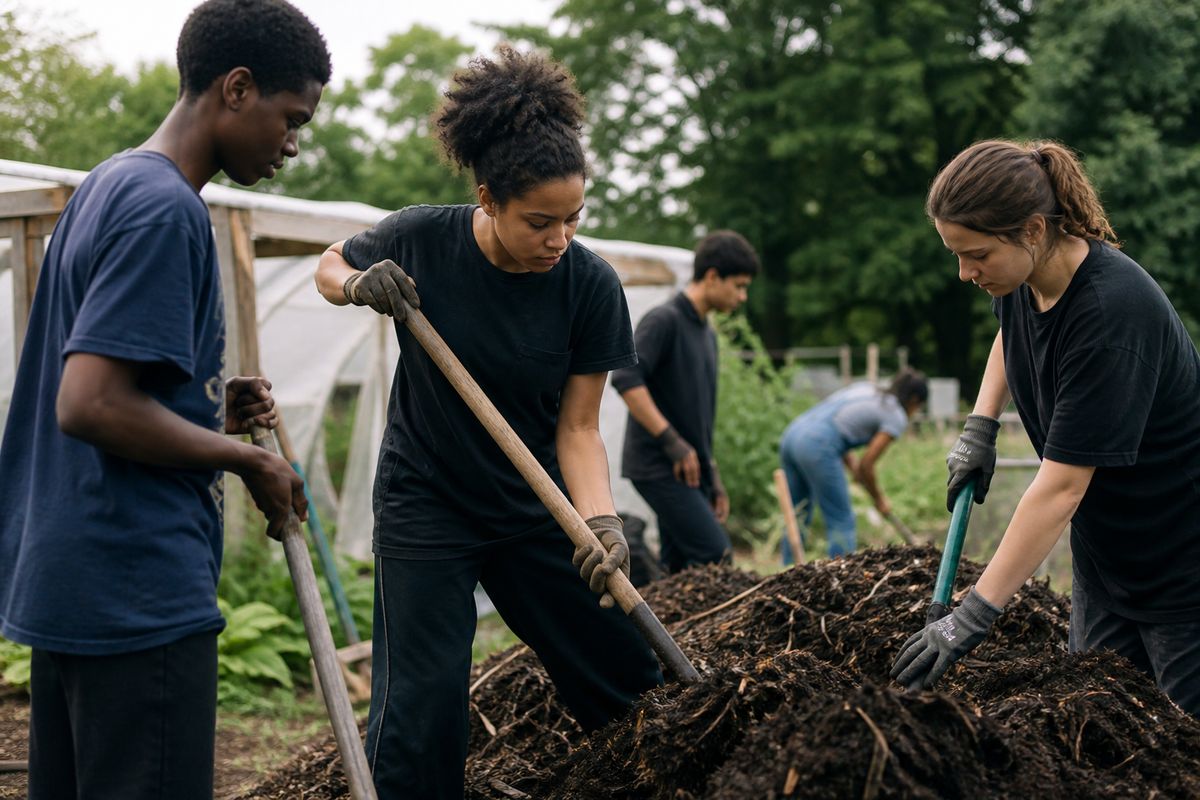
Put those two perspectives together and a pattern emerges. Slack focuses on the “where” and “how often”, embedding connection into daily workflows. The Food Project focuses on the “what” and “how it plays”, offering structured exercises that force communication and shared problem solving. In 2026, the most effective team-building programmes tend to blend both: quick rituals that keep people connected week to week, plus occasional deeper exercises that reset trust and collaboration when teams are under strain.
Why team-building activities at work are changing, and why the old approach stops working
Historically, corporate team building often meant a single offsite, a trust fall (yes, really), or a social event that mostly benefited the loudest voices in the room. It was episodic. It was sometimes cringe. And it was rarely connected to the actual friction points teams faced on Monday morning. That model struggles in 2026 because work itself has changed. Teams are more distributed, projects are more cross-functional, and the “hallway conversation” that used to patch over misunderstandings is not reliably available.
Slack’s framing gets at the heart of it: when people are actively engaged and enthusiastic, they become emotionally invested, which leads to better performance and morale, but it does not happen automatically. In a distributed environment, the default is drift. People retreat into their own tasks, their own channels, their own little bubble of context. That is how silos form, not because anyone is malicious, but because it is the path of least resistance. Team-building activities are being repositioned as a counterweight to that drift, a way to manufacture the small moments of familiarity that make collaboration smoother later.
There is also a practical reason the “big away day” model is fading: it is hard to scale and easy to cancel. When budgets tighten or deadlines loom, the first thing to go is the day-long event that feels optional. Short-format icebreakers and time-boxed exercises, by contrast, are easier to defend. A one-word check-in at the start of a meeting costs minutes, not a full day. A 30-second mini brainstorm prompt is almost comically cheap in time terms, but it can change the energy in the room and give quieter people a low-stakes way in.
And then there is onboarding, which Slack explicitly calls out. First impressions matter, and new staff need casual communication and connection with peers. In hybrid teams, a new starter can easily spend weeks interacting only transactionally, which is a fast route to disengagement. Team-building rituals, especially the light ones like “What’s on your desk” or a chat-based poll, create a structured excuse for human conversation. Not forced vulnerability, just basic familiarity. That is often enough to make asking for help feel normal rather than scary.
Inside the toolkit: what modern team-building activities actually look like
The most useful thing about the current wave of team-building guidance is that it is specific. Not “go build trust”, but “here is an activity, here is how it works, and here is why it works”. Slack’s icebreakers are designed to trigger candid conversation quickly and build connections in minutes. The “one-word check-in” is a simple round where each person shares one word related to a central topic, such as what they had for breakfast or what they look forward to at the weekend. The value is speed and inclusion, everyone is seen and heard without anyone needing to perform.

“Two Truths and a Twist” adds a playful layer: each person shares three pieces of information, two true and one fiction, and others guess the fake. It is a classic format because it reveals background and humour without demanding anything too personal. “What’s on your desk” is a neat remote-friendly twist, asking people to show something not directly work-related, like a figurine or unusual decor, and explain it. Again, the point is not the object, it is the permission to be a person at work, which is often what distributed teams lose first.
Slack also leans into creativity and asynchronous participation. A “mini brainstorm prompt” gives the group a single task and 30 seconds to complete it, like brainstorming names for a new product or a title for a marketing e-book. The speed prevents overthinking and surfaces raw ideas. A chat-based poll, using a multiple-choice question such as where someone wants to visit on their next vacation, creates quick interaction and follow-on conversation. There is also a suggestion to rank top memes or GIFs around a theme, shared in a discussion thread or canvas, which is not exactly groundbreaking, but it can work for teams that already communicate that way.
The Food Project’s games bring a more embodied, problem-solving flavour. “Evacuation” is explicitly about building teamwork through problem solving by all team members, designed for 10 to 20 people over 10 to 15 minutes with medium risk. “Lily Pads” requires decision making, planning, communication, and helping others, with a physical activity element, for groups of 8+ over 30 to 60 minutes with medium risk. For larger groups, “The Food Project Baseball” and “Assemble the Square” are low-risk, 10-minute icebreakers for 20+ participants. The key here is that these are not just chatty get-to-know-you exercises, they force coordination under constraints, which is often where real team dynamics show up.
Industry analysis: the real payoff is not “culture”, it is execution
It is tempting to talk about team building as a culture story, and it is, but the more interesting angle in 2026 is execution. When Slack talks about reducing siloing and boosting cross-functional collaboration, it is describing operational throughput. Silos slow decisions because context is trapped. Cross-functional work fails when teams do not trust each other’s intentions or competence. And morale is not just a warm fuzzy metric, it affects whether people raise risks early, whether they share half-formed ideas, and whether they stick around long enough to compound expertise.
There is also a subtle but important leadership shift embedded in the sources. Slack points out that when leaders offer activities to create an inclusive and supportive environment, employees manage conflict more easily and feel more loyalty to their employer, which can improve performance and retention. That is a reminder that team building is not something leaders “delegate to HR” and forget. The leader’s role is to set the tone, make participation safe, and ensure activities do not become another arena where only the confident thrive.
From an industry perspective, the integration of team-building activities into collaboration platforms is also a sign of where workplace software is heading. Tools are no longer just about tasks and messages. They are about shaping behaviour. If a platform makes it easy to run a poll, start a huddle, or share a lightweight ritual in a channel, it nudges teams towards connection. That is not inherently good or bad, but it is powerful. It means culture is being influenced by product design choices, not just by company values statements.
And there is a cautionary note worth stating plainly. Not every team needs the same activities, and not every activity is inclusive by default. Physical games with “medium risk” might be inappropriate for some groups or environments. Meme-sharing might exclude people who do not relate to that style of humour. The best programmes in 2026 treat team building like any other work process: test, adapt, and measure qualitatively through feedback. The sources do not provide formal measurement frameworks or statistics, so any claims about quantified ROI would be speculation. But the logic is solid: better communication and trust reduce friction, and reduced friction improves delivery.

What This Means For You
For managers and team leads, the practical takeaway is that team-building activities at work should be designed like a cadence, not a one-off. A simple starting point is to pick one lightweight ritual and run it consistently for a month. A one-word check-in at the top of a weekly meeting is almost frictionless. A chat-based poll on a Monday morning can pull remote colleagues into the same conversation without forcing anyone to speak on camera. The win is not the activity itself, it is the repeated signal that connection is part of the job, not something people do only after hours.
For HR and people teams, the opportunity is to build a menu of activities with clear parameters, just like The Food Project does: group size, time required, and risk level. That makes it easier for busy leaders to choose the right tool for the moment. Onboarding is an obvious place to start because Slack explicitly highlights “strengthen onboarding integration” as a benefit. Build a simple onboarding playbook that includes one low-stakes icebreaker in week one, and one collaboration-focused exercise in the first month. It is not about making new starters overshare, it is about making it normal to talk to colleagues beyond tickets and tasks.
For employees, especially those in distributed teams, it is worth reframing team building as self-protection rather than corporate theatre. The more colleagues know each other as humans, the easier it is to ask for help, clarify expectations, and resolve conflict before it turns into a mess. If an activity feels awkward, fair enough. But it is often less awkward than the alternative, which is miscommunication, duplicated work, and that creeping sense of isolation that makes people quietly start job hunting. When done well, the best team-building activities are not performative. They are small investments in making day-to-day work smoother.
Closing thoughts: the future of team building is smaller, steadier, and closer to real work
The 2026 shift in team-building activities at work is not about bringing back forced fun. It is about acknowledging that modern teams need deliberate connection to function, especially when they are distributed. Slack’s guidance focuses on quick, repeatable icebreakers and the idea that engagement and morale do not appear by magic. The Food Project’s activity list adds something corporate guidance often lacks: clear logistics and an emphasis on problem solving as a route to trust.
The bigger story is that team building is becoming operational. It is being designed into the rhythm of meetings, channels, and onboarding. It is being treated as a tool to reduce siloing, strengthen cross-functional collaboration, and make conflict easier to manage. And it is being pulled from a wider range of settings, including youth leadership and community programmes, because those environments have long understood something workplaces are relearning: groups do not become teams just because they share a goal.
In the end, the best approach is refreshingly unglamorous. Keep it simple. Keep it consistent. Choose activities that match the team’s reality, not the leader’s fantasy of what “culture” should look like. And if it feels a bit awkward at first, that is normal. Most worthwhile habits are.